
Yoga for Beginners: The Best Exercises for Beginners

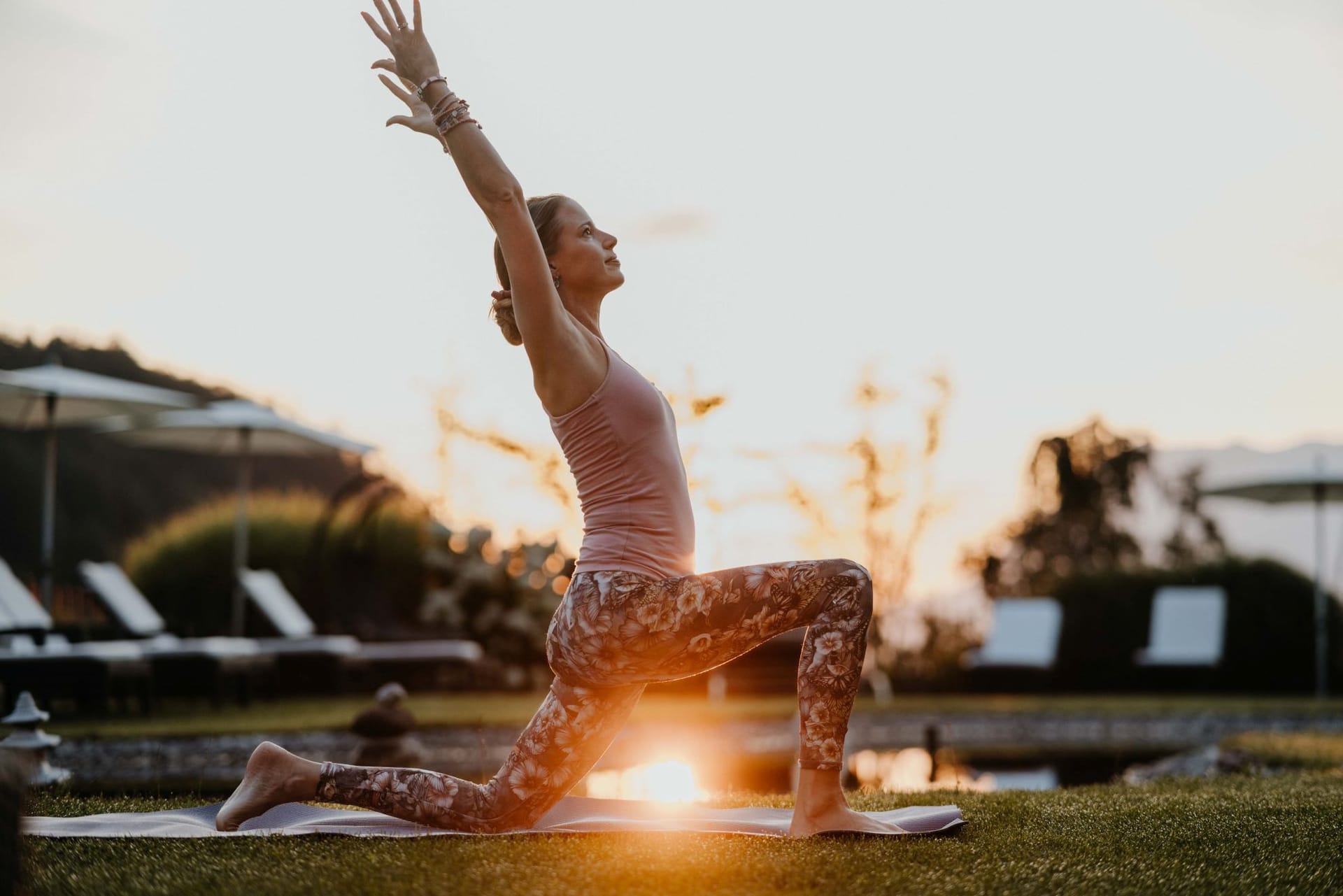
Yoga is gradually becoming a trend sport. Numerous Instagram profiles are full of various asanas (an asana is a specific body position in yoga). Mistakenly, yoga is often associated exclusively with complicated-looking exercises and enormous flexibility. This can be intimidating at first. To make you a yogi soon, we have gathered the most important information and the best beginner exercises for you.
1001 Yoga Styles
There are now over 100 different yoga styles. For beginners, quiet yoga classes focused on breathing, meditation, and a few asanas are more suitable than Jivamukti, Bikram, or Power Yoga. The latter often involve complex exercises that could be dangerous for beginners.
At the beginning, it's important that you try several styles. Not everyone likes the same yoga style. Some prefer the dynamic Vinyasa Flow, while others feel more comfortable with Kundalini Yoga and still others value the breathing exercises in Hatha Yoga. But not only is the yoga style crucial, so are the studio and the teachers. The atmosphere has to fit, then every yoga session will be a success.
Don't complain, don’t criticize, don’t compare!
Everyone is different, and so is every body. You may not be able to lift your arms over your head, while your training partner can't touch the floor with their sternum in downward-facing dog. It doesn't help to peek at other participants and compare yourself. Because in yoga, it's not about being the best in class, but about finding your inner center.
Yoga is not about touching your toes. It is about what you learn on the way down. – Jigar Gor
Benefits of Yoga
After just a few yoga sessions, you'll feel that yoga is good for you. This is also proven by some studies from Harvard University or the University of Illinois.
And yoga works not only on the physical level but also on the mental level.
The Effect of Yoga on the Body
In addition to the obvious positive effects like firm muscles and high flexibility of the body, the following points are also included:
Yoga helps memory: With its meditative character, yoga has an even more positive effect on boosting brain performance than other sports.
It relaxes and promotes the parasympathetic nervous system.
Yoga brings oxygen and light into the body.
The American Heart Association has studied the effects of yoga on the heart and found that yoga has a positive impact on heart patients.
Hormones remain balanced.
Yoga protects the immune system and makes it more robust.
Yoga promotes a positive body image.
The Mental Effects of Yoga
Improved concentration
More patience in everyday life
Detoxification / Detox
Boosted self-confidence
Balanced hormone levels
Groundedness
More creativity
The Best Asanas for Beginners
As a beginner, you should start slowly. First, get your body used to the new sport, take sufficient time, and perform the asanas at your own, breath-led pace.
It doesn't matter whether you do a 10-minute yoga session in the morning or a 90-minute session on the weekend, or whether you practice on the terrace while on vacation or at home in the living room.
For the yoga session, whether at home or in a studio, you only need the following:
Yoga mat
comfortable yoga clothing
possibly accessories like straps, blankets, or cushions
Adho Mukha Svanasana – Downward-Facing Dog
This asana is a classic and should not be missing from any yoga class. The exercise helps with headaches and stimulates the nervous system in the body.
Here's how it works:
It's best to start on all fours. Hands should be shoulder-width apart and knees hip-width apart.
Exhale to lift the knees off the mat and stretch.
For proper body tension, gently press yourself away with your hands so that the heels sink into the mat.
Hold this position for 1-3 minutes, then return to all fours or child's pose.
Balasana – Child's Pose
The child's pose is a very calming and relaxing exercise. It relieves the eyes, nerves, brain, breath, and mind as well as the back and shoulders. This asana is a great follow-up exercise to downward-facing dog.
Here's how it works:
Kneel in the middle of your yoga mat and sit on your heels. The big toes touch here, and the knees are hip-width apart.
Now bend forward until your forehead touches the floor.
You can either place your hands, palms down, on each side of your head or lay your arms, palms up, alongside your body.
Focus on calm, even breathing, and stay in this position for at least 30 seconds, but no more than a few minutes.
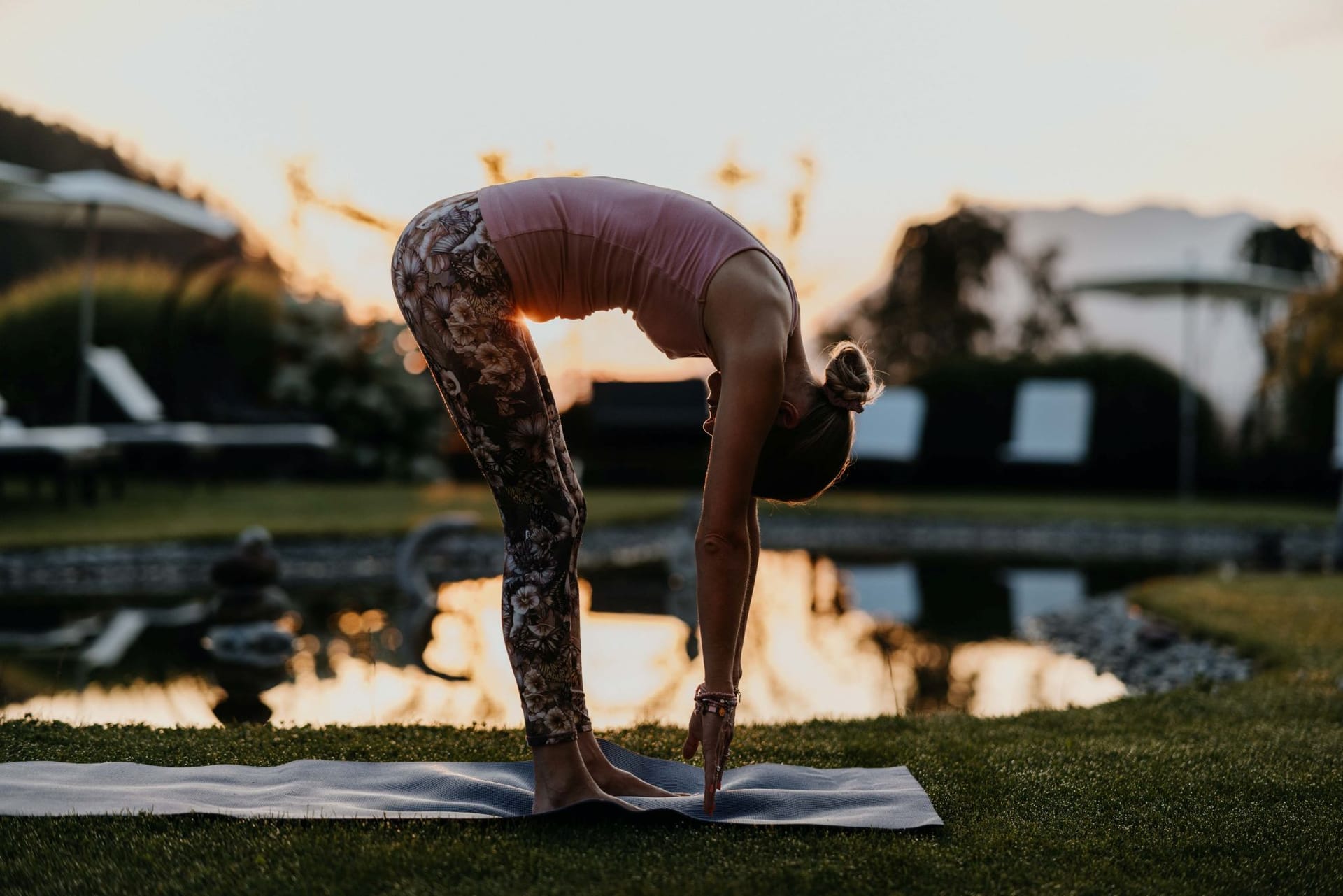
Uttanasana – Standing Forward Bend
Uttanasana is a standing yoga exercise. Here, the head hangs below the heart, which allows fresh, oxygen-rich blood to flow into the brain. This exercise revitalizes and gives the body an oxygen boost.
Here's how it works:
Stand on the mat in mountain pose (Tadasana).
Exhale as you bend forward over the hip joints.
If possible, place your palms on the floor or touch it with your fingertips. You can also clasp your arms over your head.
Important: Don't push towards the ground with force, but use your body's own weight. That way the body moves with the breath.
Bhujangasana – The Cobra
The cobra pose mimics the upright position of a snake. Here, the legs and hips lie on the floor while the upper body is upright.
Here's how it works:
Lie flat on your stomach so the spine doesn't bend. The tops of the feet should also rest flat on the floor, and the heels should be hip-width apart.
Now retract the elbows so that you can place your hands flat on chest level near your body. This will lift your head from the mat and allow you to straighten up.
Stretch the upper body vertebra by vertebra until your arms are straightened.
The gaze should be directed forward or slightly upward and in line with your spine.
For a more intensive stretch, direct your gaze upward and fixate on a point.
Now breathe slowly in and out a few times and enjoy this pose and stretch of the body.
When it is a good time, you can transition from the cobra back to the lying position.
Savasana – The Corpse Pose
This exercise looks simple, but it is not. It is considered one of the most important exercises by many and helps against stress, relieves tension, and enhances concentration ability.
Here's how it works:
Slowly and relaxingly lie on your back.
The lower back should be stretched and the feet hip-width apart. Due to the relaxation, the feet can calmly glide outward.
The arms lie at a 30 – 45° angle next to the torso. Make sure the shoulders are not raised and the palms face upward.
Check if the spine is long. It's easier if you move your chin slightly towards the chest.
The next step is breathing: Breathe slowly and deeply. As you exhale, let your body sink into the ground and relax.
Now remain in this rest position for at least 5 minutes and up to 20 minutes. Imagine how your body rejuvenates through deep relaxation and mentally go through the body from top to bottom. Head, jaw, neck, lungs, heart, abdomen, pelvis, legs, and feet are now consciously perceived and relaxed.
With these exercises and information, you are well prepared for your yoga start.