
Arjuna: Effects and Uses in Ayurveda

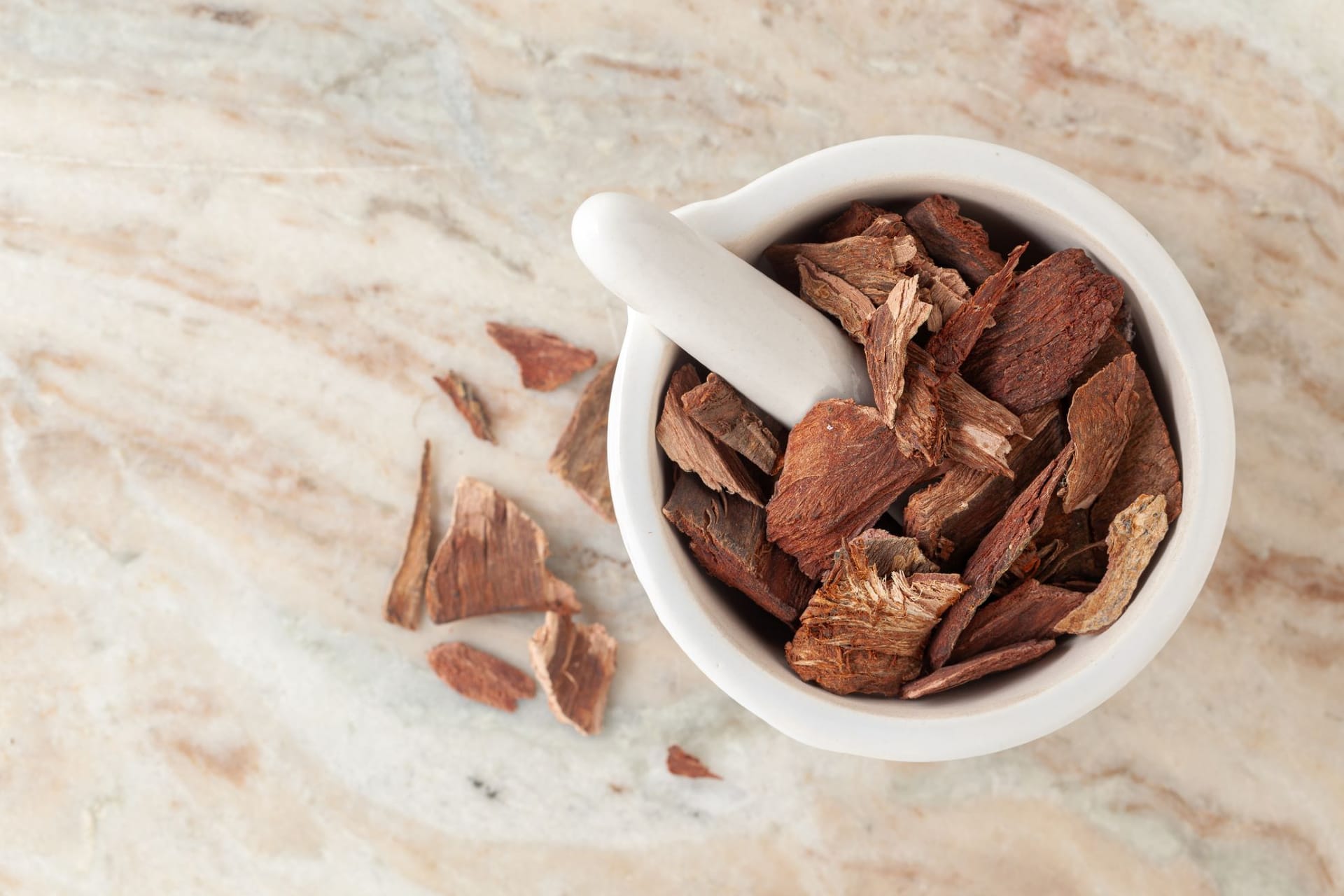
Arjuna strengthens the human body’s center of health – the heart. In Ayurveda, the Indian tree is especially valued for its healing and strengthening effects on this vital organ. Here you can learn how this medicinal plant is used in European Ayurveda® and what positive effects its powder can have on the heart.
Terminalia Arjuna: The Arjuna Tree
The impressive Arjuna tree can grow up to 26 meters tall and is native to large parts of India. Although it appears rather inconspicuous from the outside as an evergreen tree with gray-white bark, the wood inside has an extraordinary reddish color.
A powder is obtained from the red inner layer of the bark, which stands out not only because of its beautiful color but also due to its special ingredients. It contains 34% calcium carbonate, 16% tannins, 9% other calcium salts, aluminum, magnesium, organic acids, plant pigments, and sugar.
For this reason, the bark of the tree is used in Ayurveda to promote healing and strength. The spice also holds special significance in Indian mythology, as Arjuna is not only the name of a tree, but also of a legendary hero.

A Heroic Tree: The Mythology of Krishna and Arjuna
The tree shares its name with an Indian heroic figure from the epic Mahabharata. Arjuna was Krishna’s dialogue partner and a courageous warrior. According to legend, the gods brought the Arjuna tree to Earth one day when the hero needed emotional strength.
The tree restored Krishna’s friend’s strength, and from then on, humanity was also meant to benefit from the tree’s positive qualities.
Uses and Effects of Arjuna in Ayurvedic Medicine
Just like the strong-hearted warrior and hero, wisdom and strength are believed to be rooted in this tree.
It is therefore not surprising that the bark is especially used in Ayurveda for internal ailments, such as those affecting the soul or the heart. The following effects are attributed to this Ayurvedic medicinal plant (2):
strengthens the heart
purifies the blood and helps lower blood pressure
when applied to wounds, it stops bleeding and accelerates healing (also for skin conditions)
may support faster healing of bone fractures
Arjuna balances the two doshas Kapha and Pitta and thereby promotes a feeling of inner balance and strength. The medicinal plant strengthens the heart both emotionally and physically.
Arjuna for High Blood Pressure+
The spice improves the quality of the blood and blood circulation. It has a lipid-lowering effect and restores balance to the different components of the blood. In this way, it helps ensure that the vital fluid flows properly again and stabilizes the circulatory system.
It also helps prevent edema and is used to lower high blood pressure.
Wound-Healing Properties of Arjuna+
The tree is also highly valued for its wound-healing properties. Arjuna can, for example, be applied locally as a paste to wounds and ulcers, as it has a hemostatic effect and supports healing.
It is also effective in cases of bone fractures. Due to its astringent properties, the bark extract promotes healthy bone regeneration and proper healing.
Arjuna for skin diseases+
The tree can also fully unfold its effects in various skin conditions. In particular, symptoms such as itching or conjunctivitis can be relieved through local application.
It can also be used as supportive treatment for leukoderma, a loss of skin pigmentation.
Arjuna: Balm for the Heart
In addition to all these positive effects, the tree has a very special significance in Ayurveda for the heart in particular. Due to its strengthening and healing properties, Arjuna has long been used in Indian healing traditions as a heart tonic.
The heart is the expression of life, as it is a vital organ and at the same time the center of our emotions. In Ayurveda, the heart is also considered the seat of consciousness, spiritual values, and mental abilities.
Therefore, it is especially important that the heart remains healthy and strong enough to keep us in our mental and physical balance. Arjuna has a particularly soothing effect on the heart and has been used in Ayurvedic medicine for thousands of years to treat heart-related disorders (1).
Discover the Balance Treatments at the European Ayurveda Resort Sonnhof
Maintain your health, strengthen body and mind, and renew your immune system. Find your inner balance and focus on your strengths. Recharge your energy now with a beneficial Balance Cure to successfully master your everyday life!
It strengthens both the emotional and physical heart and fortifies the heart muscle. In this way, the heart rate is reduced, while at the same time the stroke volume increases. In other words: the heart needs fewer beats but beats with greater strength. This extends the relaxation phase of the heart and naturally relieves the muscle (4).
However, the heart also connects the body with the soul. Ayurveda recognizes this special relationship and therefore also uses the medicinal plant for emotional burdens. The powder is said to help heal broken hearts and provides strength and courage to regain new vitality. For this reason, Arjuna is attributed a particularly life-enhancing effect.
Does Arjuna have side effects?
No specific side effects of the powder have essentially been proven (2). However, if you suffer from heart problems, it is still recommended to consult a doctor.
Always follow the recommended dosage when taking it. Since there is still little research on the use of Arjuna during pregnancy, pregnant women should avoid it in case of doubt.
Food supplements should only be taken after consulting your doctor or healthcare provider. The information provided in this article is for educational purposes only and does not replace medical advice. The use of the recommended dietary supplements is at your own discretion.
Taking Arjuna as Powder or Capsules
Arjuna has been used for many thousands of years in Ayurveda as a natural dietary supplement and strengthening tonic (3). It is most commonly taken in powder form, known as Arjuna Churna. It can also be easily combined with other herbs such as Ashwagandha or Guggul.
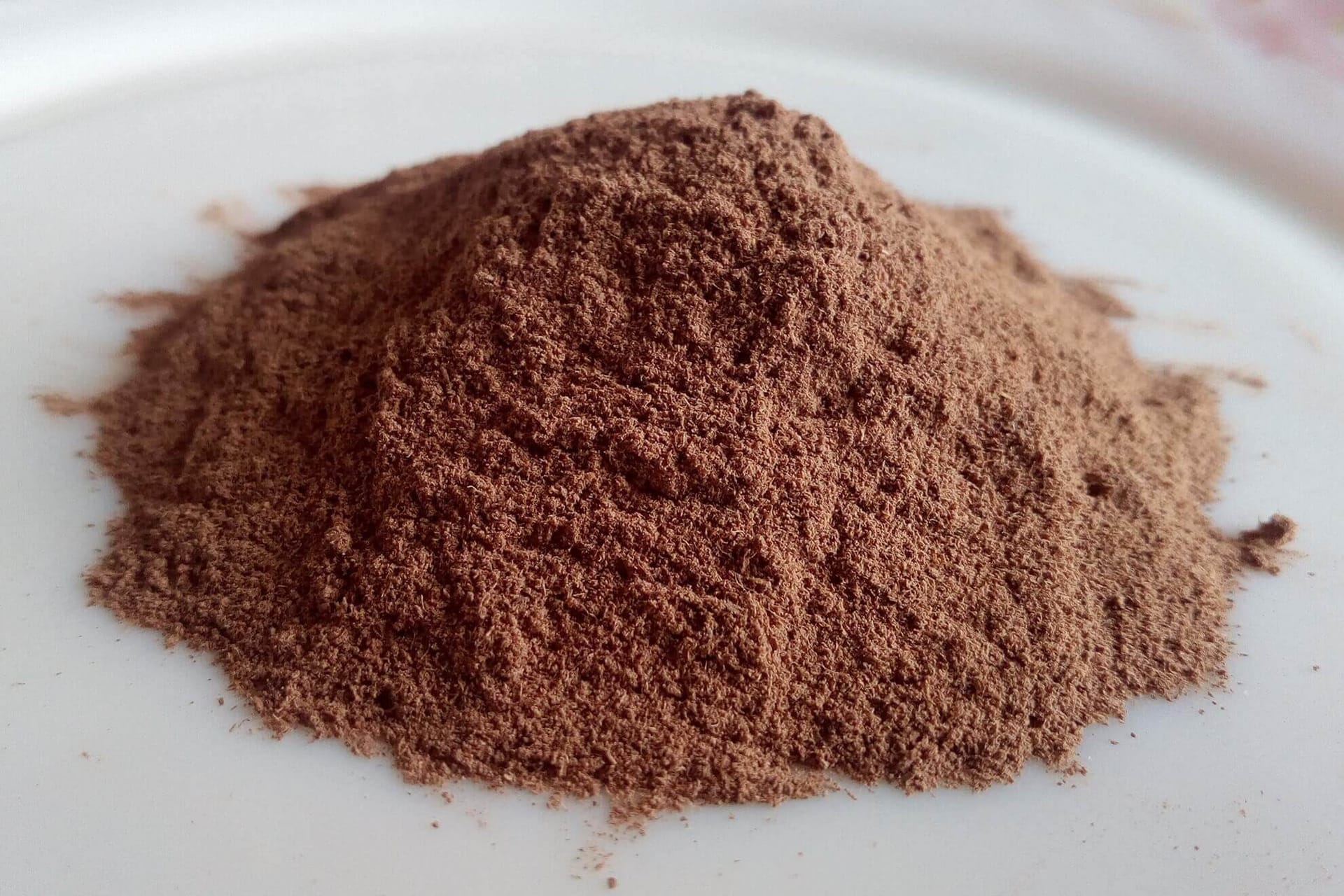
Arjuna Powder with Milk or as Tea
Due to its particularly dry properties, Arjuna is best boiled in milk. Especially for nervousness and heart complaints, Arjuna milk can be soothing before going to bed.
To prepare it, simply bring a glass of milk to a boil and stir in about ½ tsp of the bark powder. If desired, you can also add a little Ashwagandha.
Another option is to enjoy a warm, comforting tea. Arjuna tea is especially recommended for high cholesterol levels or high blood pressure.
To prepare it, simply boil ½ tsp of the powder in hot water and add a little honey to taste afterwards. Many ready-made Arjuna tea blends are also available on the market and are just as effective.
Arjuna Capsules
Of course, Arjuna capsules are also available as a dietary supplement. The recommended daily dose is usually 3 capsules per day, taken with meals.
The heart is our starting point for emotional and physical strength. With some Arjuna bark powder, this vital muscle can be strengthened in its function, helping to restore our emotional and physical balance.
Cover image: © ziprashantzi – istockphoto.com (file no. 2157420317)
Image in body text: © reddees – istockphoto.com (file no. 679252860)
Sources+
(1) Dwivedi, S. (2007). Terminalia arjuna Wight & Arn.—A useful drug for cardiovascular disorders. Journal of Ethnopharmacology, 114(2), https://doi.org/10.1016/j.jep.2007.08.003.
(2) Kumar, V. et al. (2023). Therapeutic potential and industrial applications of Terminalia arjuna bark. Journal of Ethnopharmacology, 310, https://doi.org/10.1016/j.jep.2023.116352.
(3) Ramesh, P., & Palaniappan, A. (2023). Terminalia arjuna, a Cardioprotective Herbal Medicine–Relevancy in the Modern Era of Pharmaceuticals and Green Nanomedicine—A Review. Pharmaceuticals, 16(1), 126. https://doi.org/10.3390/ph16010126.
(4) Thakur, S. et al. (2021). Terminalia arjuna: A Potential Ayurvedic Cardio Tonic. International Journal for Research in Applied Sciences and Biotechnology, 8(2), 227-236. https://doi.org/10.31033/ijrasb.8.2.30.
Elisabeth Naschberger-Mauracher
Elisabeth Naschberger-Mauracher is the managing director and Ayurveda expert at the European Ayurveda Resort Sonnhof in Thiersee, Tyrol. Since 2019, she and her husband have jointly managed the Ayurveda resort, which has received numerous awards, including: Global Winner: Detox Program, Best Medical Spa Award, and World Luxury Hotel & Spa Award.
Insights
Guduchi: Application and Effect in Ayurveda
Guduchi is one of the most sacred plants in Ayurveda. This combative medicinal herb is a true energy boost for the body and mind, helping you to recharge. Thanks to its detoxifying and purifying properties, it can be used in a particularly versatile way for healing and health promotion and is also considered an elixir of youth. Why the plant is also referred to as divine nectar, how Guduchi works, and is best taken, we explain here.

Basics of Ayurvedic Nutrition
You are not what you eat – you are what you digest! What you provide your body with every day forms the foundation of your health.

Longevity: Healthy aging with European Ayurveda®
In a world that is constantly changing, many people are looking for ways to lead a long and fulfilling life. Longevity, often referred to as longevity, is influenced not only by genes but also by environmental factors and individual behaviors. The holistic approach of European Ayurveda® offers you proven therapies and routines for healthy aging.