
Ashwagandha: Effects and Uses in Ayurveda

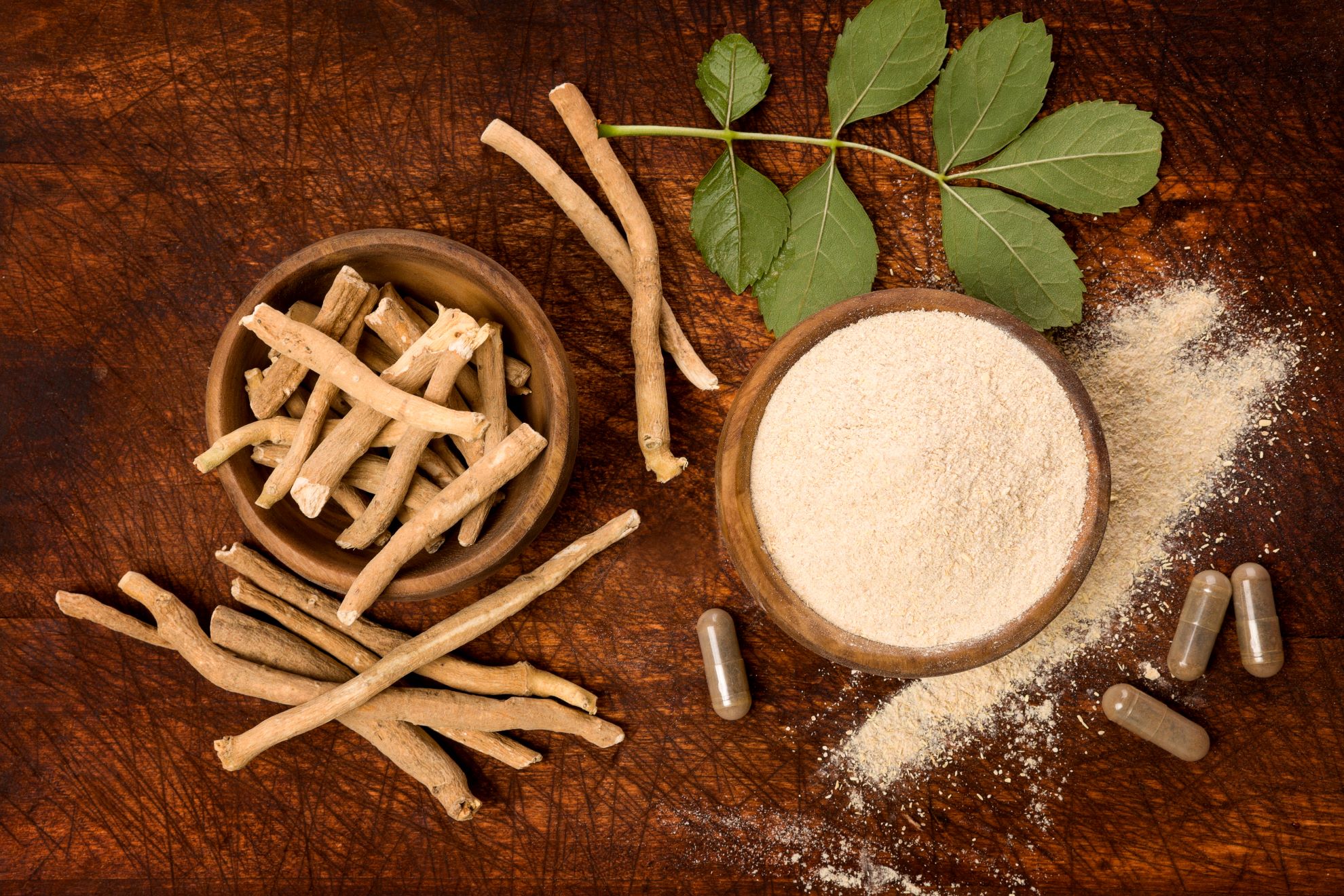
For sleep disorders and inner restlessness, Ayurveda has a true “miracle remedy”: Ashwagandha. The herb has a stress-reducing effect and helps you gain more strength and energy. In Ayurvedic medicine, it therefore has a long tradition and is used for a wide range of complaints. What Ashwagandha actually is, how it works, and how it is taken, you can find out here.
What is Ashwagandha?
Ashwagandha (botanically Withania somnifera) is an ayurvedic medicinal plant that mainly grows in India, Pakistan, and Afghanistan as a small shrub with red berries. The name comes from Sanskrit and means “smell of the horse.”
The origin of the name is not known for sure. It is believed that it may come from the fact that the scent of the plant is said to resemble that of horses. Alternatively, it may refer to the plant’s supposed ability to evoke strength, as the horse symbolically represents power and vitality.
Because it has a positive effect on sleep, the plant is also known locally as “sleep berry.” It is sometimes referred to as winter cherry or Indian ginseng. In Ayurvedic medicine, the plant has been known for over three thousand years and is used to treat a wide variety of conditions.
Ashwagandha ingredients
The benefits and effects of Ashwagandha are closely linked to its ingredients. The active compounds are found in the leaves, but in higher concentration in the root of the plant. The most important components include:
Alkaloids
Withanolides
Choline
Fatty acids
Amino acids
What is Ashwagandha used for? – Effects on mind and body
In Ayurveda, the plant is often regarded as a “wonder berry” because it can be used in many different ways. Primarily, it is used to help balance stress and the typical Vata-related imbalances associated with it.
When Vata dosha is increased due to physical or mental strain, it can manifest as worries, anxiety, and sleep disorders. It may also cause digestive issues, muscle discomfort, twitching, or emotional imbalance.
So what does Ashwagandha do? If you are experiencing elevated Vata dosha, feel restless, or have trouble sleeping, then pay attention—this plant has a lot to offer.
Dietary supplements should only be taken after consulting your doctor. The information provided in this article is for educational purposes only and does not replace medical advice. The use of any recommended dietary supplements is at your own discretion.
Better sleep and more energy
Ashwagandha offers many benefits and brings both inner calm and energy for body and mind. This may sound like a contradiction, but it is closely connected. As soon as your restless mind begins to relax, your sleep quality also improves. You fall asleep more easily and your deep sleep phases become longer. The result: you wake up the next morning feeling more rested and with more energy.

The plant is not called “sleep berry” for nothing
The plant is not without reason also known as the “sleep berry” and is commonly used in Ayurvedic medicine for sleep disorders. However, when you are well rested, this has many other positive effects as well. It also increases performance, memory, and concentration. The herb sharpens your mind, allowing you to work with greater focus.
Emotions are brought into balance
In cases of general restlessness, anxiety, and nervousness, Ashwagandha can bring relief. It calms the nerves, and your unsettled emotions gradually return to balance. Tension begins to dissolve, and you find your center again. With regular use, the body learns to cope better with stress, and you become more calm and composed internally.
Digestion is soothed
Tension and stress often affect the stomach as well. When Vata dosha is increased, this imbalance can be felt through bloating, constipation, or nausea. This healing herb can help calm Vata dosha again and relieve digestive discomfort. In this way, both you and your digestive system—as well as the digestive fire Agni—benefit.

Ashwagandha and potency
In Ayurveda, the plant also has a tradition as an aphrodisiac and is even said to enhance potency. While Ashwagandha is believed to have a potency-enhancing effect in men, it may also have an effect in women. It can help increase libido and contribute to greater sexual well-being.
Therefore, it may be worthwhile to try Ashwagandha when trying to conceive.
Discover the Balance Cures at the European Ayurveda Resort Sonnhof
Computer work, stress, and the feeling of constantly needing to be reachable place a great deal of pressure on you, your body, and your immune system. The result? A weakened immune system, health problems, and an accelerated aging process. And this is exactly where the Balance Cures come in.
Losing weight with Ashwagandha: is it possible?
Stress has a major influence on overweight. Especially during prolonged tension, the body releases more cortisol, which can lead to increased appetite and even strong cravings. How can Ashwagandha help with this?
Well, because it has a stress-reducing effect, the herb prevents the body from producing too much cortisol. As a result, appetite is somewhat regulated and stays within a normal range. In addition, the plant-based remedy helps stabilize blood sugar levels, which is why it can also be used in cases of diabetes. A rapidly dropping blood sugar level can also trigger increased feelings of hunger. With Ashwagandha intake, such hypoglycemia is less likely to occur. In this way, the herb can actually be a useful dietary supplement for weight loss.
On the other hand, Ashwagandha can also be used to support muscle building. It accelerates muscle development, which also affects body weight. As a result, Ashwagandha may contribute to weight gain through increased muscle mass.
Are there side effects when taking Ashwagandha?
At normal dosages, Ashwagandha generally does not cause side effects. However, if the dosage is too high, it may lead to abdominal pain, nausea, or diarrhea. If you stick to the recommended dosage, there is usually no cause for concern.
However: pregnant and breastfeeding women, as well as children, are advised against taking it. This is due to a lack of studies, so it is better to be cautious. If you are taking medication, you should also consult a doctor beforehand to avoid possible interactions. Otherwise, it is generally considered safe.
Can Ashwagandha cause liver damage?
Some studies suggest a possible influence of Ashwagandha on thyroid function and liver values. Therefore, if you have pre-existing liver or thyroid conditions, you should consult a doctor before taking it.
Is Ashwagandha dangerous? No, no health damage has been proven in healthy individuals. However, the German Federal Institute for Risk Assessment (BfR) advises people with such pre-existing liver or thyroid conditions against using it.
Ashwagandha: correct dosage and intake
In this country, the herb is not classified as a medicine but is considered a dietary supplement. It is therefore freely available and can be purchased in the form of capsules or powder.
The recommended dosage is 300–500 mg per day, ideally split across meals. The onset of effects depends on the form of intake. Make sure to choose high-quality products.
Capsules+
The advantage of Ashwagandha capsules is that the dosage is already clearly defined. Therefore, they are especially ideal as a beginner-friendly product, because you can hardly go wrong with them.
The capsules can simply be taken with a little liquid and are completely tasteless. However, the effects usually only set in after some time. For the beginning, you can therefore safely choose capsules.
Powder+
Ashwagandha powder is made from the ground roots of the plant and can be used in various ways. A particularly popular and easy way to prepare it is as a tea, but the powder can also be added to yogurts or smoothies.
This way, you benefit from the substance in its pure form and can adjust the dosage individually, exactly as it feels right for you!
Ashwagandha recipes: benefiting from its effects
Honestly, it has to be said: the taste of Ashwagandha powder can take some getting used to, as it is somewhat bitter. But don’t worry, it’s all a matter of preparation!
If you would like to experience the effects of this medicinal plant yourself, we have two delicious recipes for you here. This way, taking it becomes a daily ritual and is also tasty.
Ashwagandha tea
In many cultures it has long been known: a nice cup of tea helps you fall asleep. If you add some Ashwagandha, you get a particularly effective bedtime drink.

You need:
1 tsp Ashwagandha powder
hot water
cinnamon or cardamom
1 tsp honey or agave syrup
Bring the water to a boil and add the powder. Let the tea steep for about 5 minutes. To reduce the bitter taste, you can add cinnamon, cardamom, or a spoon of honey or agave syrup. The Ashwagandha tea has a calming and sleep-inducing effect and is also said to have antibacterial properties. This way, you can gently drift into a relaxed sleep in the evening.
Moon Milk
Everyone knows: a warm glass of milk before going to bed creates a comforting, relaxed feeling and helps you unwind. The so-called Moon Milk also contains Ashwagandha, which further promotes healthy and deep sleep.
You need:
200 ml (almond, oat, or other plant-based) milk
1 tsp Ashwagandha powder
1 tsp honey or agave syrup
1 tsp raw cocoa powder
1 tsp dried lavender flowers
Warm the milk slowly and gradually stir in all the ingredients. Instead of cocoa powder, you can also use a pinch of cinnamon, depending on your taste. You may vary the ingredients as you like—what matters most is that it tastes good and helps you relax.
Ashwagandha can contribute to more balance and harmony in your life through its positive effects. However, remember that Ayurveda is always a holistic approach, and taking the plant alone cannot compensate for an unhealthy lifestyle. Combined with meditation and proper Ayurvedic nutrition, Ashwagandha can help reduce stress in everyday life and support you in finding your inner balance again.
Cover image: © eskymaks – istockphoto.com (File No.: 1041090420)
Ashwagandha studies and sources+
1 Federal Institute for Risk Assessment (2024):
“Ashwagandha: Sleepberry preparations with possible health risks”.
2 Federal Institute for Risk Assessment (2012):
“Risk assessment of plants and plant preparations”.
3 Mirjalili M. et al. (2009):
“Steroidal lactones from Withania somnifera, an ancient plant for novel medicine”. Molecules (14/7), pp. 2373–2393.
4 Gorelick, J. et al. (2015):
“Hypoglycemic activity of withanolides and elicited Withania somnifera”. Phytochemistry (116), pp. 283–289.
5 Raut, A. et al. (2012):
“Exploratory study to evaluate tolerability, safety, and activity of Ashwagandha (Withania somnifera) in healthy volunteers”. Journal of Ayurveda and Integrative Medicine (3/3), pp. 111–114.
6 Chandrasekhar K. et al. (2012):
“A prospective, randomized double-blind, placebo-controlled study of safety and efficacy of a high-concentration full-spectrum extract of ashwagandha root in reducing stress and anxiety in adults”. Indian Journal of Psychological Medicine (34/3), pp. 255–262.
Elisabeth Naschberger-Mauracher
Elisabeth Naschberger-Mauracher is the managing director and Ayurveda expert at the European Ayurveda Resort Sonnhof in Thiersee, Tyrol. Since 2019, she and her husband have jointly managed the Ayurveda resort, which has received numerous awards, including: Global Winner: Detox Program, Best Medical Spa Award, and World Luxury Hotel & Spa Award.
Insights

Losing Weight with Ayurveda: Nutrition Tips for All Doshas
How can I lose weight healthily and effectively? Many people ask themselves this question, yet the answer looks a little different for everyone. From an Ayurvedic perspective, weight loss is type-dependent and works best with a personally tailored holistic regimen. How it works, you can find out here.

Yoga for relaxation
Yoga for relaxation is a gentle practice designed to reduce stress and calm both body and mind. It is especially suitable at the end of a hectic day or as part of a regular relaxation routine to support physical and emotional well-being.