
With European Ayurveda® to healthy skin

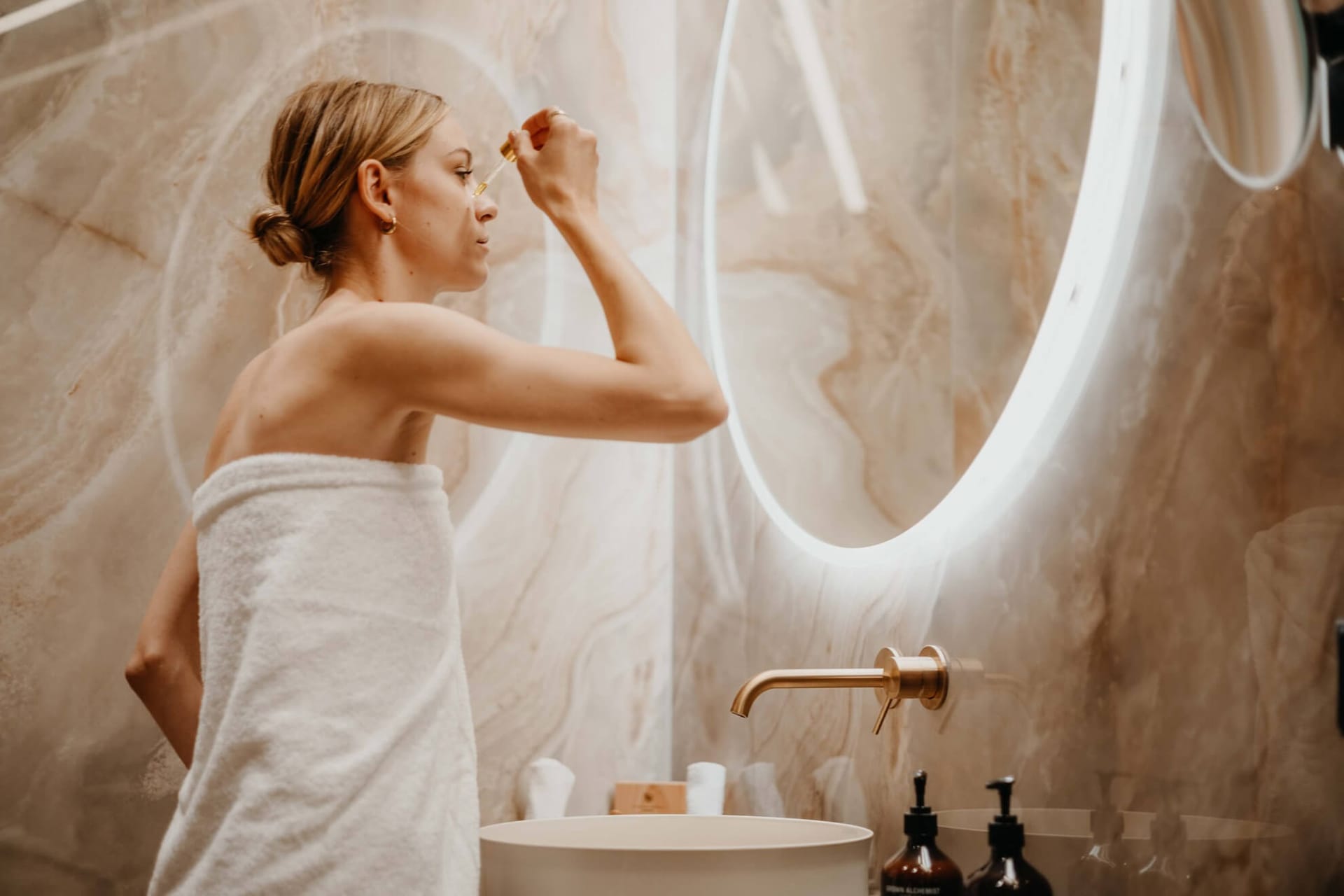
For Ayurvedic understanding, the skin is much more than just our largest organ – it is also extremely significant for the diagnostic detection of diseases. As a mirror of our interior, we can read from it whether something is not right and accordingly, we can react. Here you will find out how you can ensure healthy skin with the help of European Ayurveda®!
Healthy skin from an Ayurvedic perspective
The teachings of Ayurveda aim at a holistic concept. For this reason, a healthy skin appearance naturally plays a major role in the prevention and therapy approaches of the Indian healing teaching. You can ensure a healthy skin appearance with the 3 most important pillars, namely with conducive nutrition, proper skincare, and a mental balance. nutrition, proper skincare and a mental balance, for a healthy skin appearance !
Basically, you can imagine the skin from an Ayurvedic perspective like this: the skin (Tvak/Tvaca) is an secondary tissue (Upadhatu) that arises when the third main tissue muscle (Mamsa Dhatu) is formed.
The previous main tissues have a strong influence on the skin: the nutrient fluid (Rasa Dhatu) and the blood (Rakta Dhatu). Depending on the condition of the nutrient fluid, the skin has a different tension, or certain skin moisture (turgor).
That sounds a bit complicated at first. But in principle, it's like this: if Rasa Dhatu is weak, then typical problems include dryness and wrinkles. Diseases then lead to redness, or also paleness, as well as impurities and various skin diseases.
Then one of the 5 subdoshas of Pitta plays a role: the Bhrajaka Pitta. It controls the skin in terms of pigmentation, color, radiance, and absorption.
What is your skin type?
So, each skin has different properties, depending on which dosha it is dominated by. Take a look at which skin type most closely matches yours:
Vataskin: this is dry, rough, thin, fine, cold, pale, dull, wrinkled, and often prematurely aged. Here, a gentle cleansing is important, as well as intensive care.
Pittaskin: often reddish, strongly pigmented, warm, moist or oily. Prone to inflammation – most influenced by diet. Important are consistent intensive cleansing, as well as care products that are low-irritant, cooling, sebum-reducing, and astringent.
Kaphaskin: denser, cool, well-hydrated, and whitely glowing. Regular cleansing is sensible. However, Kapha skin is comparatively the easiest to care for.
What causes skin diseases?
Metabolic disorders naturally also affect the skin appearance. Ayurveda describes the following causes for the development of skin diseases:
Too much fresh grain, yogurt, fish, salty & sour foods
Too much urid dal, radish, sesame, milk, pastries & jaggery
Incompatible, fatty or heavy foods
Suppression of natural urges, especially nausea & vomiting
Cold water after intense heat, physical exertion or agitating situations
Physical exertion in intense heat & after a heavy meal
Uncooked food, before the previous meal has been digested
Sexual activity with poor digestion
Incorrect execution of Panchakarma
Daytime sleep
Many skin diseases like neurodermatis result from a mental imbalance. The resulting skin symptoms are divided into the three categories Vataja Kushta, Pittaja Kushta & Kaphaja Kushta .
Of course, only a detailed examination by an expert can provide exact information. The results then provide the individual disease development (Samprapti) – from which an adapted therapy concept can be developed.
Ayurvedic care for healthy skin
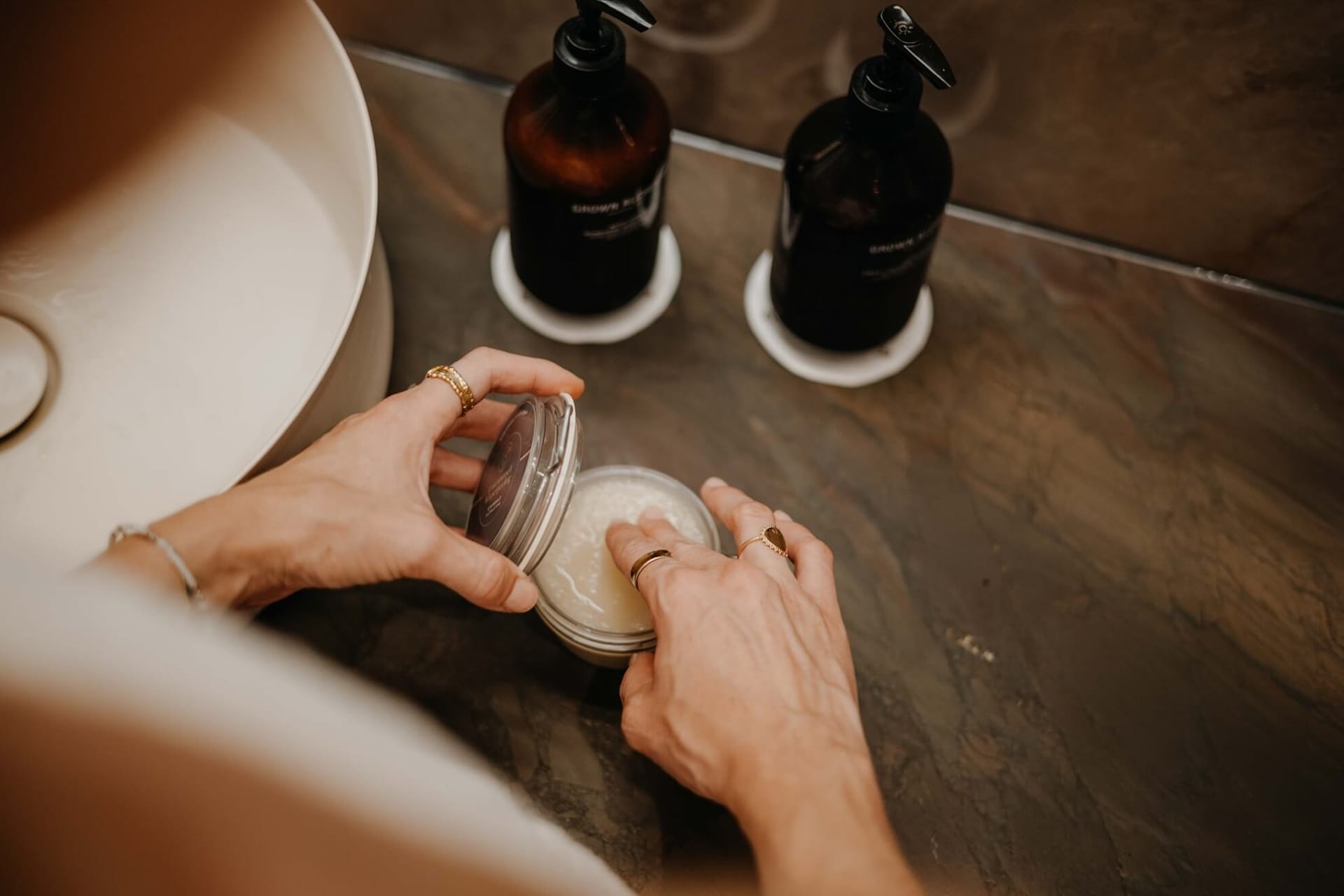
If you want to take care of your skin with Ayurveda, it's best to use Ayurvedic natural cosmetics.
The oils and medicinal plants contained in them are tailored to the specific needs of your skin type. When you read the term “Lepa”, it refers to external applications.
These should always be applied against the direction of hair growth. This is because the active ingredients are ultimately absorbed through the sweat glands, hair roots, and capillaries.
After drying, the Lepa is removed.
You can also find soothing oils for your skin in our Shop.
10 dietary tips for healthy skin
Now we would like to give you a few practical dietary tips to help you achieve healthy skin. Only through a balanced diet is the skin supplied with essential nutrients that do not irritate it or cause any digestive or metabolic residues. In principle, Ayurvedic skin nutrition is vegetarian.
Good for healthy skin are:
Sweet & bitter foods
Cooking, steaming, or blanching
Fresh, steamed vegetables
Fresh, sweet, seasonal, and ripe fruits (apples, grapes, pears, melons)
Fresh, bitter salads (endive, chicory, radicchio, dandelion)
Cooked legumes (especially mung dal)
Cooked grains (rice, quinoa, spelt, oats, wheat)
High-quality & stable fats (Ghee, coconut oil, olive oil)
Only pasteurized cow's milk and cream (organic)
Mild, digestive spices (ginger, turmeric, coriander, cardamom)
With these 10 dietary tips you can do something good for your skin! They ensure good hydration, stable skin surface fats, and a healthy skin barrier. Additionally, they help prevent inflammation and allergies.
On the other hand, avoid:
Very acidic foods
Roasting, frying, baking, grilling, & deep-frying
Red meat, dark fish & seafood
Excessive alcohol
Sunflower oil, safflower oil, sesame oil (because they are heated to high temperatures)
Processed or fermented products
Excessively spicy spices (chili, hing, pepper)
Too much salt
Of course, plant-based supplements are also an option to counteract dryness or prevent inflammation.
Conclusion
Together with the main pillars of Ayurvedic teaching, you can provide your skin with the necessary care and treatment it needs. Find out if you have Vata, Pitta, or Kapha skin and consider some basic dietary tips. With European Ayurveda®, you can prevent or actively combat skin diseases—for healthy and beautiful skin.
Insights
Why Ayurveda Helps Against Acne
Healthy skin is, from an Ayurvedic perspective, a reflection of well-being: If the body is in harmony with itself, the skin also radiates. Conversely, there is always a specific cause for skin irritations, redness, or inflammatory blemishes. Here you can read how you can tackle acne with Ayurveda – because after all, there is a solution in Ayurveda for every problem!

Ayurveda against neurodermatis
Severe itching and inflamed skin areas: People with neurodermatitis know these symptoms all too well. The so-called atopic dermatitis is quite persistent, but can be alleviated very well and, above all, sustainably with Ayurvedic treatment methods. How this works and what Panchakarma cures actually are, you can find out here.