
Padabhyanga: The Ayurvedic Foot Massage

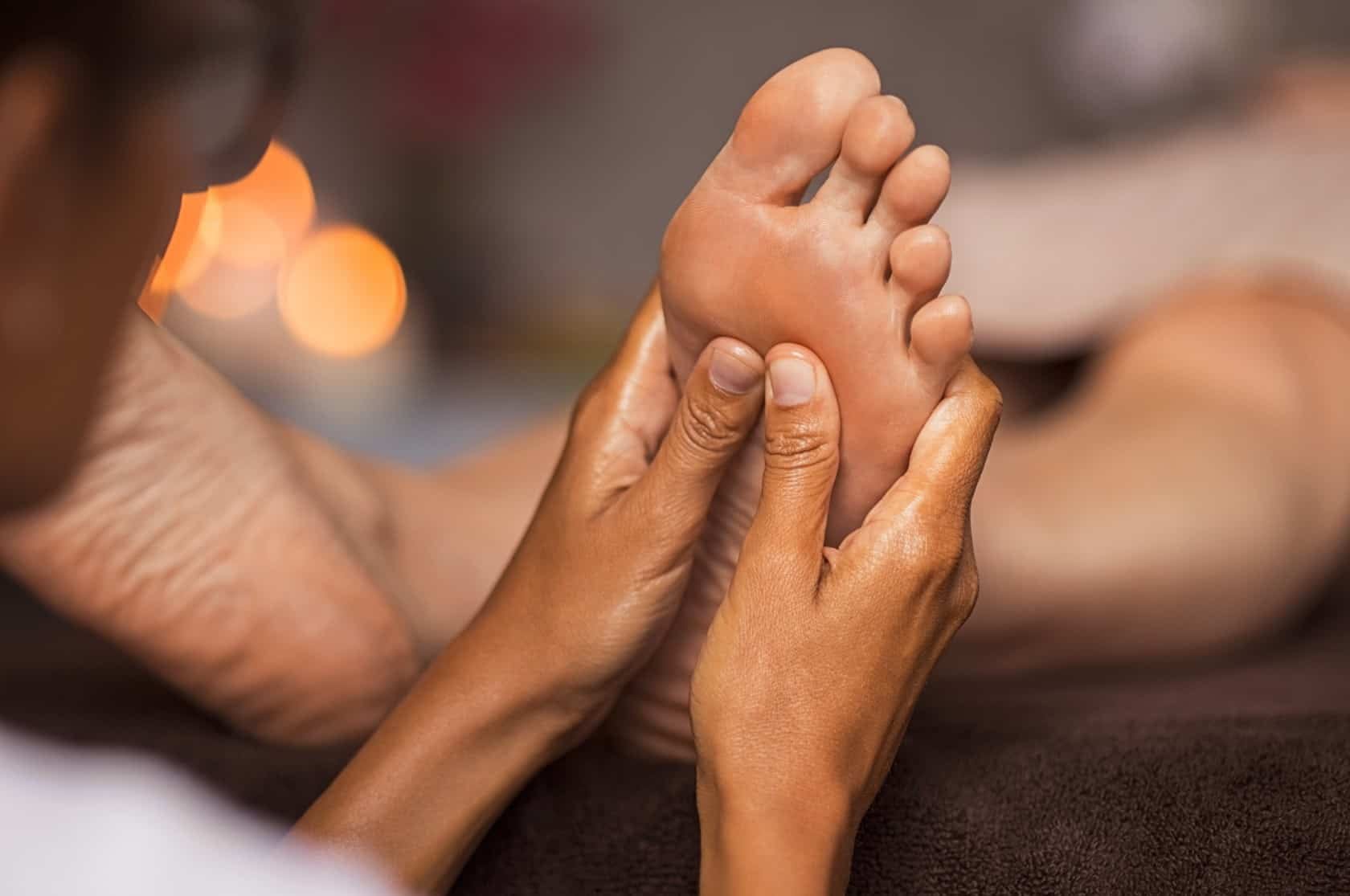
The Padabhyanga is one of the most important Ayurvedic massage techniques and refers to the foot massage in Ayurveda. It is an extremely soothing and relaxing treatment where feet, legs, and knees are gently massaged with nourishing oil. After an Ayurvedic foot massage, you will not only feel deeply relaxed but also have particularly soft, supple feet! What exactly happens during the Padabhyanga massage and for which ailments it is particularly beneficial, you will find out in the following article.
How does the Ayurveda foot massage work?
In Indian tradition, feet (Pada) hold great significance – because with them, we connect to the earth. In Ayurveda, the human body is viewed as an inverted tree: The roots are on top, near the head, and the branches (legs and feet) point downward. It also shows whether the human body has been well cared for and nourished on the feet.Therefore, the Ayurvedic foot massage has a very long tradition. It is already mentioned in the ancient Ayurveda text "Charaka Samhita":
"By massaging the feet with oil or ghee, roughness, stiffness, dryness, fatigue, and numbness are immediately eliminated; tenderness, strength, and firmness of the feet are promoted." – Charaka Samhita, Sutrasthana 5, 90-92
The foot massage in Ayurveda is a soothing and rejuvenating ritual. Before the Padabhyanga, a 5 to 10-minute relaxing foot bath with fragrant herbs is usually offered. The subsequent massage is then performed lying down. The focus of the treatment is on the feet, but the lower legs, thighs, and knees are also included.
The feet are first rubbed with a warm balm of ghee or Ayurvedic oils. Then the therapist begins to massage the toes with soft movements, followed by the top of the foot, the sole, and the calves. Massage techniques include gentle circular and stroking movements. The ankle, the arch of the inner side, and the heel receive circular movements, while strokes are performed on the top of the foot, the toes, and the spaces between the toes. If you would like to try Ayurvedic foot massage yourself, we have a guide here for you.
Padabhyanga Guide: Pure Relaxation!
For a moment of relaxation in everyday life, you can also apply basic techniques of the Padabhyanga massage yourself.
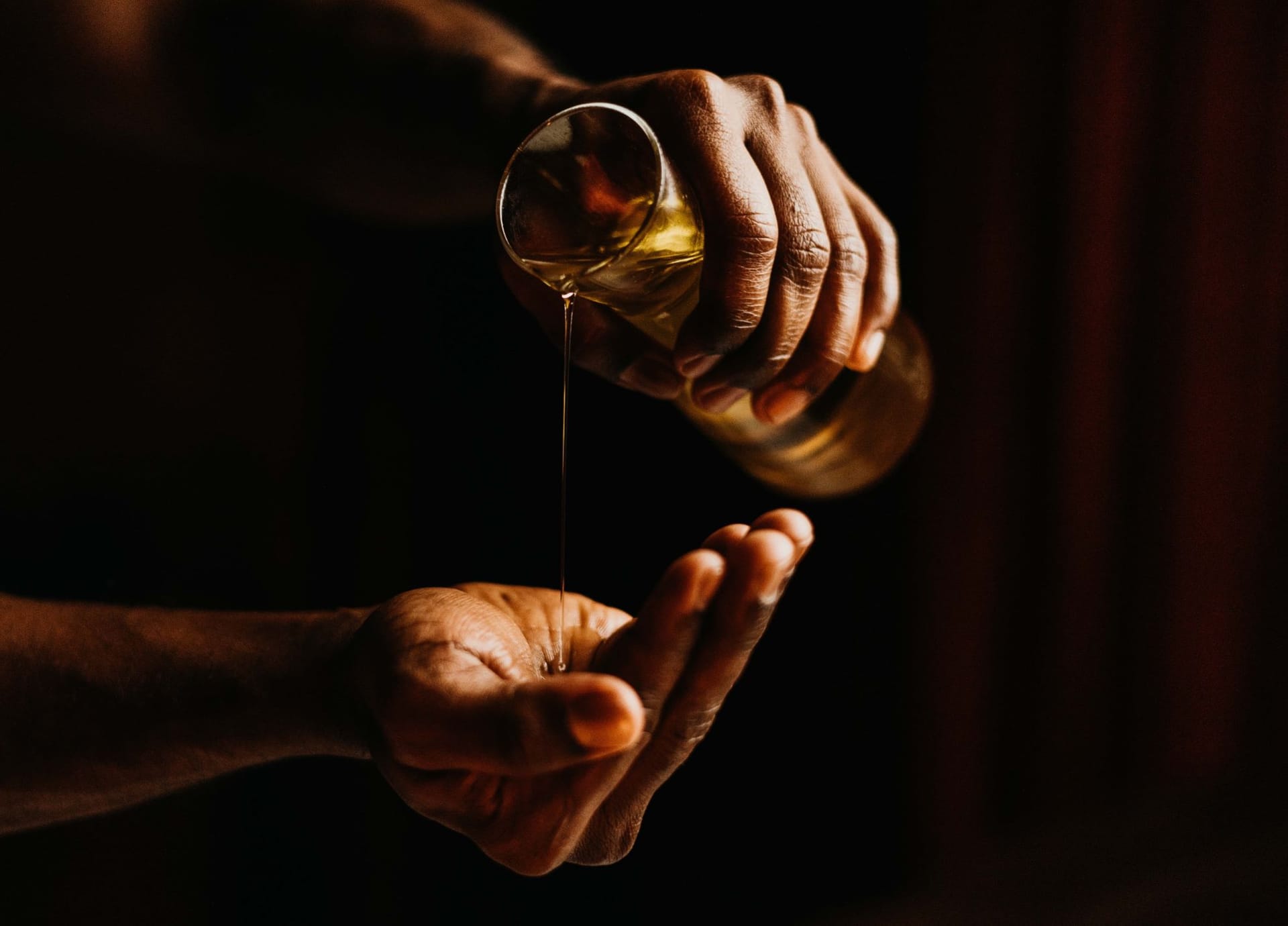
You only need 2 tablespoons of warm oil (e.g., sesame oil or ghee) and a towel. Just sit comfortably cross-legged on the floor or on a chair and place a towel under your feet. Then gently rub the entire foot and ankle with a little oil.
Now perform various circular and stroking movements on the foot.
Proceed as follows:
First, massage the spaces between the toes with your thumb, moving back and forth in the spaces.
Then stroke the tendons on the top of the foot with your thumb.
Now circle the ankle with your index, middle, and ring fingers, then stroke the Achilles tendon with your thumb and forefinger.
Gently bend all the toes with both hands.
Now also massage the vital point in the center of the sole of the foot clockwise.
Next, you can massage the inside edge of the foot with your thumb in an elliptical shape.
And finally, stroke over the outer edge of the foot with your hand.
After the massage, follow a resting phase of about an hour. Then wrap the foot warmly with thick socks. You can calmly practice the foot massage as a daily ritual before going to bed and thus prepare yourself for a restful night's sleep!
The Effects of a Padabhyanga Massage
Like all Ayurvedic massages, the Padabhyanga is meant to balance the Doshas and thus promote holistic well-being and health. The foot massage particularly calms the Vata Dosha, has a grounding effect and reduces stress. During the Padabhyanga, a deep state of relaxation sets in, which continues even after the massage.
By stimulating the Marma points, blockages are released and life energy (Prana) can flow more freely again. According to Ayurvedic healing arts, Padabhyanga has a particularly positive effect on the lungs and eyes, as there are Marma points for these organs on the foot.
Other effects of Padabhyanga are:
Strengthening and revitalizing of the tissues
Promotion of circulation
Energy flow is stimulated
Enhancement of vision
Relaxation of muscles, tendons, and vessels
Improved sleep
Soft and well-cared-for feet
Recovery of body and mind
The Ayurvedic Foot Massage: Application
In principle, a foot massage is suitable for all constitutional types of Ayurveda; however, depending on the type, the type of oil may vary.
For Pitta types , for example, ghee, coconut oil, or sunflower oil is recommended.
Vata types should use ghee, sesame oil, or olive oil.
Kapha types are well advised with ghee, sesame oil, or jojoba oil.
In general, Vata types benefit especially from a foot massage, as it works very well against Vata disturbances , such as stress, exhaustion, and nervousness.
The applications of Padabhyanga at a glance:
Inner restlessness
Sleeping disorders
Headaches
Difficulty relaxing
Burn-out symptoms
Lymphatic congestion
Calf cramps
Swelling of the feet
Pain therapy
Dry and cracked feet
Vision difficulties
When should the foot massage not be performed?
Basically, Padabhyanga is a very gentle treatment suitable for almost everyone. In the case of foot injuries, acute thrombosis, vein inflammations or open wounds , however, you should refrain from an Ayurvedic foot massage. You should also avoid it in the case of skin diseases, such as eczema or febrile diseases .
The Marma Points: What are they and where are they located?
An important role in Padabhyanga is also played by the vital points on the feet and legs. According to Ayurvedic teaching, these so-called Marma points have a subtle connection to the body organs. The stimulation of the Marma points strengthens and vitalizes the corresponding organs.
The Marma points are the intersections of the energy channels (Nadis) through which our life energy (Prana) flows. There are a total of 108 of these vital points, distributed throughout the entire body. One of the most important marma points is located between the eyebrows, another on the sternum. The blockage of the marma points causes congestion and stress. However, if the points are stimulated and massaged, this has a relieving, stress-reducing and invigorating effect . Since the points are connected to specific organs, a marma massage can specifically alleviate different complaints.
There are the following marma points on feet and legs, among others:
at the foot root: “Kurcha” – affects eyesight
center of the sole: “Talahridaya” – influences heart-lung function
above the knee joint: “Ani” – promotes muscle relaxation
ankle: “Indravasti” – harmonizes the digestive organs
on the thighs: “Urvi” – responsible for the pancreas
in the knee joint: “Janu” – connected with spleen and liver
Padabhyanga with the Kaash bowl
A special variant of the Padabhyanga is the foot massage with the so-called “Kaash bowl.” The word “Kaash” refers to the special alloy (mainly copper and tin) from which these traditional bowls are made. The foot massage is performed using the round side of the Kaash bowl..
It works like this: Before the massage, the bowl is slightly warmed and rubbed with oil or ghee. Then the masseur or masseuse moves the bowl in circular and stroking movements over the different zones of the foot. The Kaash massage with herbal ghee is said to have a harmonizing effect on the Pitta dosha.
Whether with Kaash bowl or just with oil: after an Ayurvedic foot massage you are completely relaxed and your feet feel pleasantly cared for. The Padabhyanga is suitable as an evening ritual for deep, restful sleep or a relaxing wellness treatment with a professional Ayurveda masseur. Treat yourself and your feet to a break from everyday life – they have truly earned it!
Title image: © Rido – stock.adobe.com
Insights
Ayurveda Massage: the Abhyanga Massage
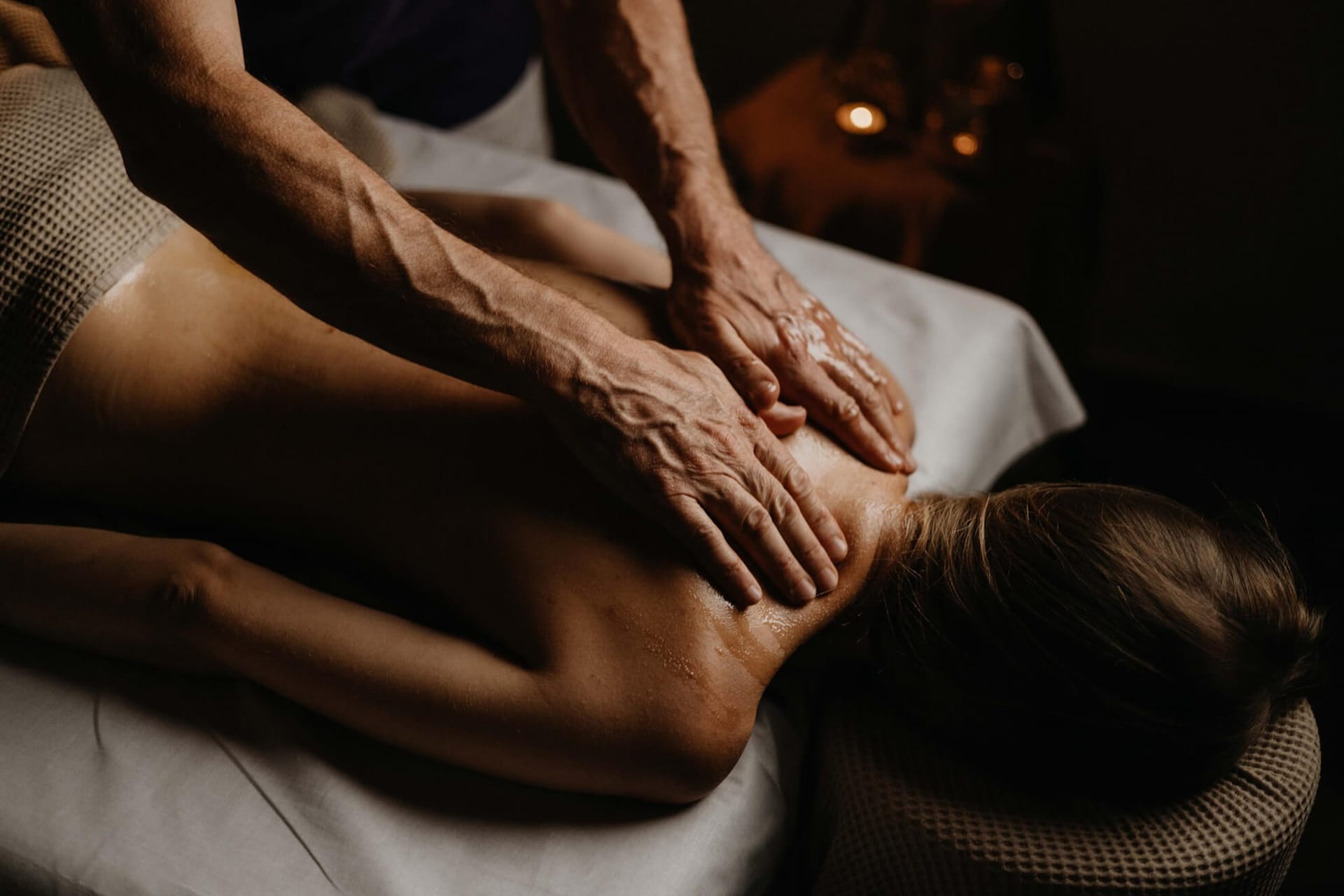
In addition to nutrition and yoga, massages are also part of ayurvedic health teachings. The Abhyanga massage is one of the most beneficial and effective treatment forms. Translated from ancient Indian, Abhyanga means "great oiling with loving hands."
Ayurveda Massages: Overview of All Approaches
Ayurveda massages have a positive effect on health and are therefore primarily used for medical applications. Incidentally, there is also a feel-good effect. Depending on individual customization, an Ayurveda massage can be relaxing, invigorating, or strengthening – or all of these combined. Through treatment appropriate to the type, Ayurveda massages are good for a healthy body and mind. Here are all the important types at a glance.