
Yoga exercises for a healthy back

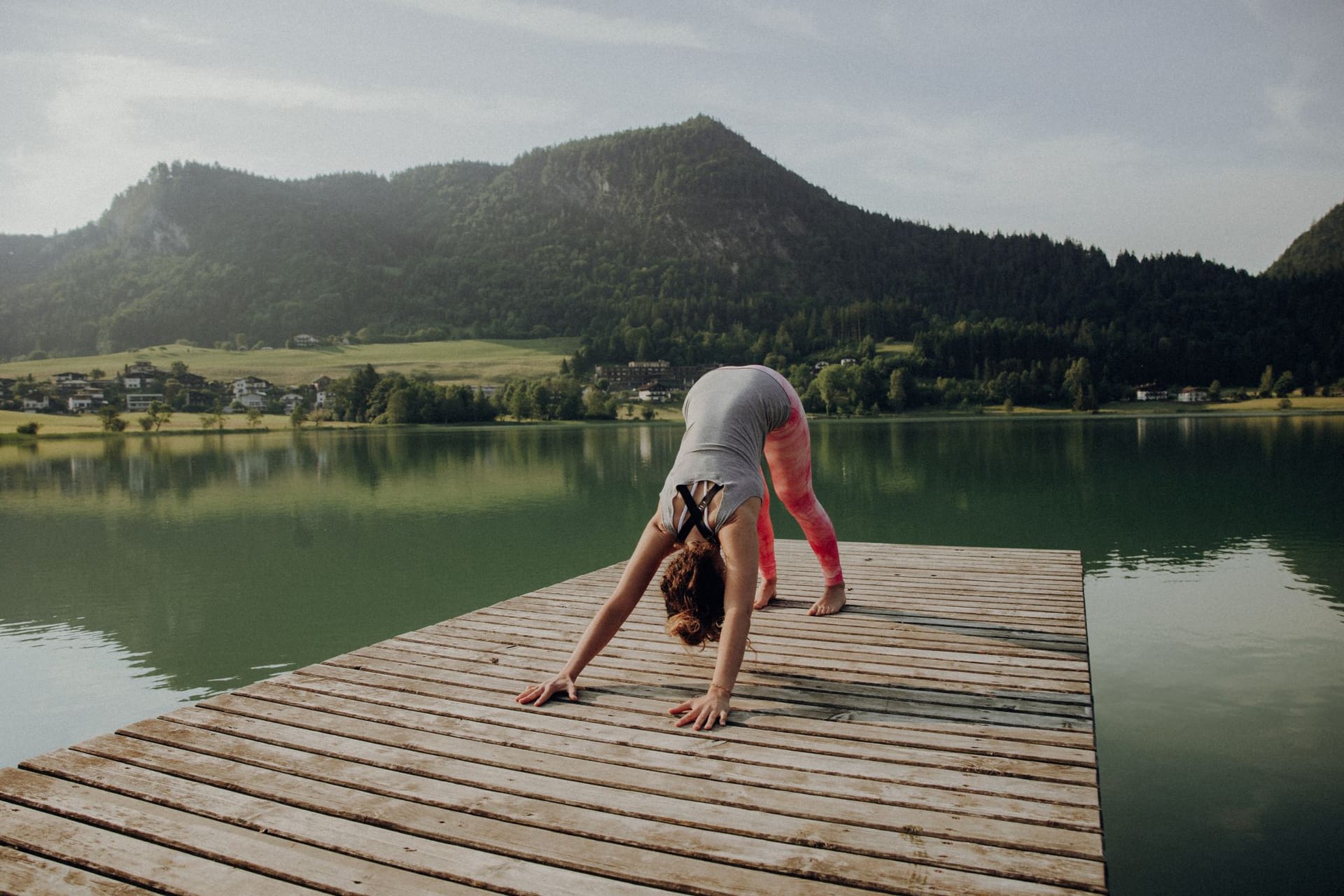
Whether you have a job where you sit a lot or are constantly on your feet: your back does a lot of work throughout the day. To keep it healthy, it is important to stretch and strengthen your back. Yoga exercises for the back make exactly that possible and can also help if back pain has already started to set in. Here you will find some very simple yoga exercises for the lower back, the shoulder and neck area, and more!
Yoga exercises for the back: Basics for beginners
First things first: yoga is always an individual matter. There is no “one-size-fits-all” solution, because what feels good for one person may feel uncomfortable for another. This aspect is especially important when trying to relieve back pain with yoga or find exercises for a straight back. Therefore, take your time to discover what works best for you.
Exercises for back pain
Do you suffer from back pain and want to do something about it with gentle yoga exercises? Then you should listen carefully to your body while practicing the asanas. If an exercise causes sharp or particularly severe pain, you should stop immediately. If you have disc-related problems, it is best to consult your doctor beforehand about which movements are suitable for you.
However, if you occasionally feel a pull in your back or slight discomfort during the exercises, this does not automatically mean you should stop. This so-called stretching pain is a normal and logical physical reaction, as your body is not familiar with many yoga movements from everyday life and first needs time to adapt.
One final tip you should know when practicing yoga for frequent back pain: avoid bending forward from a standing position with a rounded back too often. This movement is generally counterproductive for relieving pain and can also place unnecessary strain on the intervertebral discs.
Exercises for excessive lumbar arch (lordosis)
An excessive lumbar arch, often referred to as lordosis, occurs when the abdomen protrudes forward, the pelvis tilts forward, and the buttocks are also extended backward. This postural misalignment often causes pain in the lower back.
But what actually causes this postural issue? Quite simply: in most cases, the hip flexors are shortened and the back extensor muscles are overstretched because of sitting too long and in the same position. With lordosis, the back is not the only area that needs strengthening. The deep abdominal and gluteal muscles also require targeted strengthening as direct antagonists in order to stabilize posture.
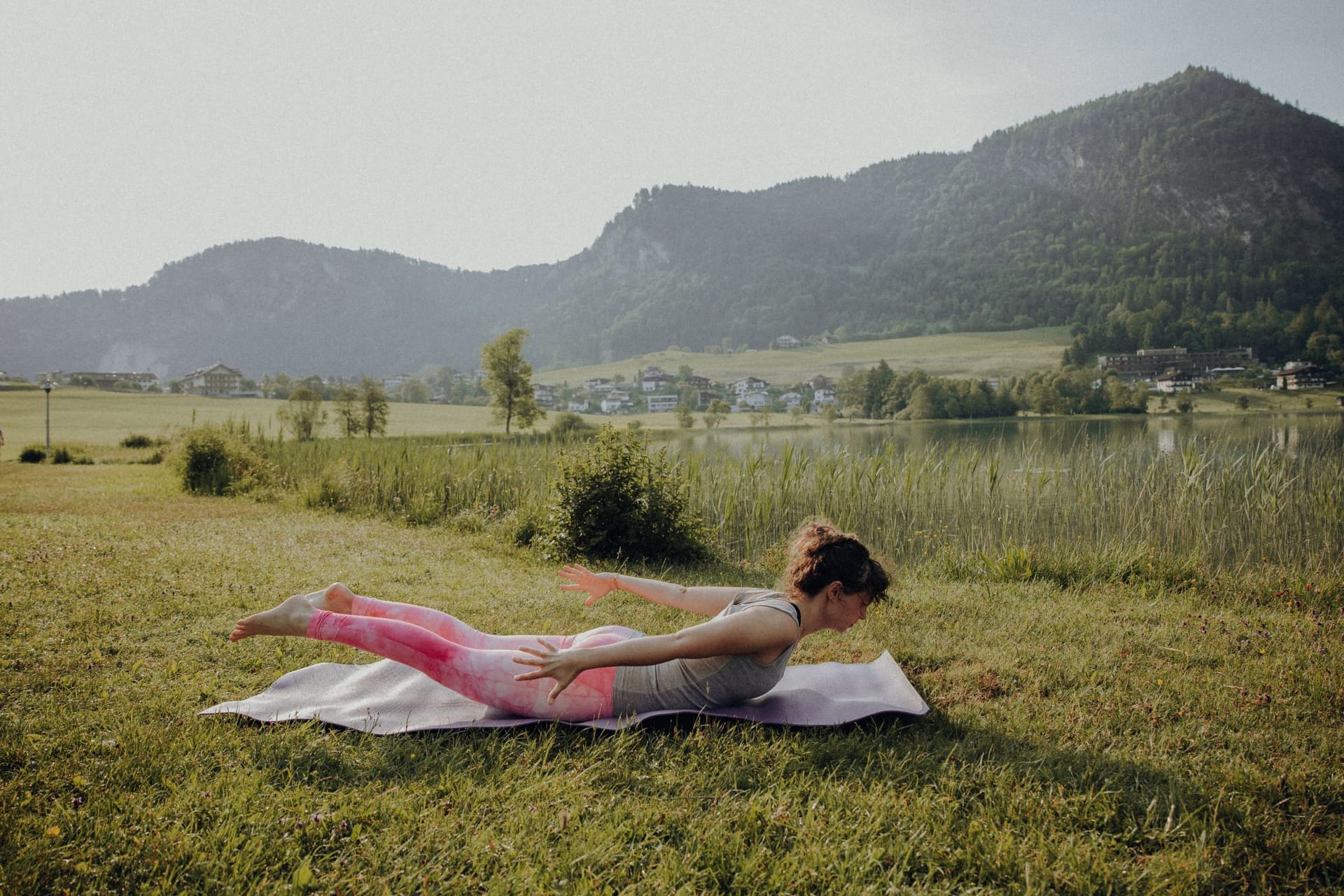
A yoga exercise that works particularly well for lordosis is the Locust Pose:
Lie down on your stomach.
Stretch your arms straight forward with your thumbs pointing toward the ceiling. Alternatively, bend your arms at shoulder height so that your palms face the floor.
Extend your legs straight back.
Now lift your arms, legs, and head at the same time and direct your gaze forward.
Hold the position briefly, then slowly release and repeat the lifting movement 5 to 10 times.
Equally effective is the combination of Cat Pose and Cow Pose. We’ll explain how that works in a moment, but first let’s look at an area of the body that often makes itself known rather quickly: the lower back.
Yoga exercises for the lower back
The following exercises relieve the lower back. This often feels very pleasant after just a few moments. However, make sure that your lower back remains in contact with the mat throughout the exercises. With that in mind, you are ready for the following three asanas:
Kneel on your mat and sit back on your heels. With a forward bend, lower your upper body until your abdomen rests on your thighs and your forehead touches the floor. Stretch your hands forward and maintain a calm, steady breath.
Lie on your back and keep your right leg extended. Draw your left knee toward your chest and hold it with your bent left arm. If you like, you can loosely hold your left wrist with your right hand. Consciously relax your shoulders and remain in this position for several breaths. Then switch sides.
Stay on your back and place your left foot on the mat so that the knee is bent. Rest your right foot on your left knee and hold your left shin or lower leg with both hands. Draw your left leg toward your chest and again keep your shoulders relaxed. Breathe calmly in and out and switch sides when you are ready.
If you wish, you can transition seamlessly from these yoga exercises into postures that strengthen the shoulder area.
Back yoga: Exercises for shoulders and neck
In this section, we describe the Bridge Pose, Eagle Arms, and a neck stretching exercise. Of course, this does not mean that the yoga repertoire ends there! With a little practice, you will quickly develop an intuitive sense of which movements feel particularly beneficial for your arms and shoulders. You can start with these three exercises:
Bridge Pose
Lie on your back with the soles of your feet on the floor. Your arms rest parallel to your torso.
Gently walk your fingers toward your heels so that your shoulders move away from your ears.
Slowly lift your pelvis until a diagonal line forms between your shoulders and knees.
In this posture, it is important that your legs remain parallel.
Side neck stretch
Stay seated upright and lightly place the fingertips of your right hand on the floor.
Reach your left hand over your head to your right temple and gently tilt your head to the left while your right hand lightly reaches toward the right.
You should feel a noticeable stretch along the side of your neck.
Repeat the exercise on the other side.
Eagle Arms
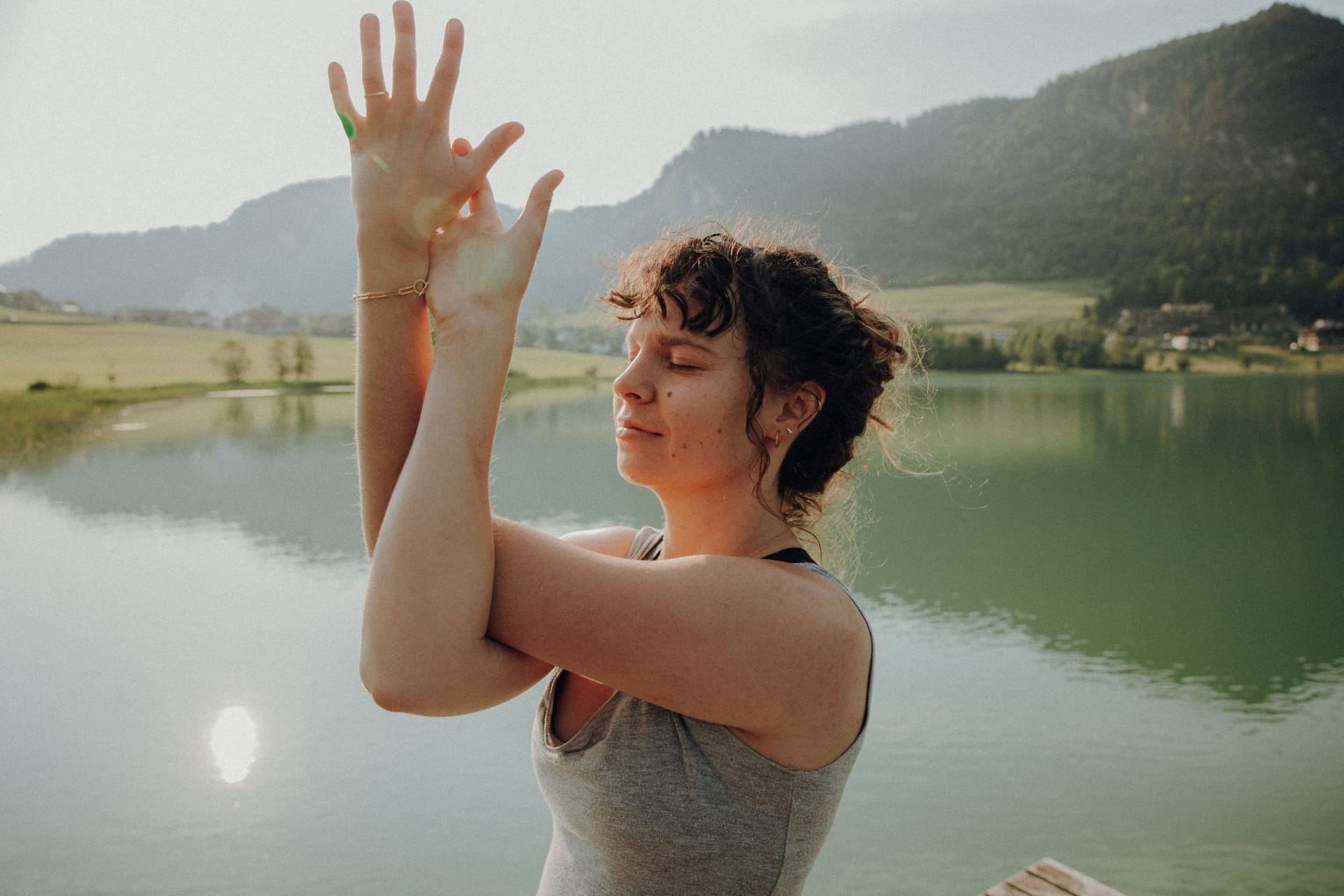
From a lying position, come into Lotus Pose or a simple cross-legged seat. Take a moment to find a truly upright posture.
Bend your arms out to the sides at shoulder height and then bring them together in front of your face.
Bring your right arm over your left so that your elbows are crossed.
Depending on what feels more comfortable, either press your palms together or rest the backs of your hands against each other.
Actively lift your elbows once more and hold the crossed-arm position for several breaths before slowly releasing and switching sides.
Important: Breathe into the back of your shoulders. With every inhalation, create more space; with every exhalation, consciously relax. If you would like to further stretch your shoulders and back, draw your elbows toward your navel.
Yoga as prevention: Stretching and strengthening with back exercises
Yoga exercises for the back can provide relief when you are in pain or experiencing tension. At the same time, they are an ideal preventive measure, which is why we can only encourage you to try some strengthening and stretching exercises yourself!
A yoga exercise that strengthens the back muscles
Just 20–30 minutes of back yoga every day can help improve your posture, which in turn helps prevent back pain. An excellent strengthening exercise for the back and core is the Cobra Pose:
Lie down on your stomach.
Place your palms on the floor beside your upper body at about armpit height and lengthen your body as much as possible.
As you inhale, lift your upper body and look upward. Your pelvis remains on the floor.
If you prefer, you can support yourself on your elbows instead of your hands. It is also entirely up to you whether you briefly hold your breath and lower yourself again on the exhale, or remain in the posture for several breaths before returning down.
A yoga exercise that stretches the back
As mentioned earlier, we now come to a true yoga classic: the Cat-Cow combination:
Cat Pose: Come into an all-fours position and, as you exhale, round your back upward. Draw your chin toward your chest so that you create a pronounced cat stretch.
Cow Pose: As you inhale, move in the opposite direction, allowing your abdomen to sink downward while lifting your gaze upward.
You can practice these two exercises alternately again and again. If you like, you can of course add small variations and, for example, gently move from side to side.
When it comes to yoga for the back, there is really only one rule of thumb: Listen to your body's signals and choose the movements that feel good for you. Your back will thank you for it—guaranteed.