
Yoga for men: exercises for more strength and flexibility

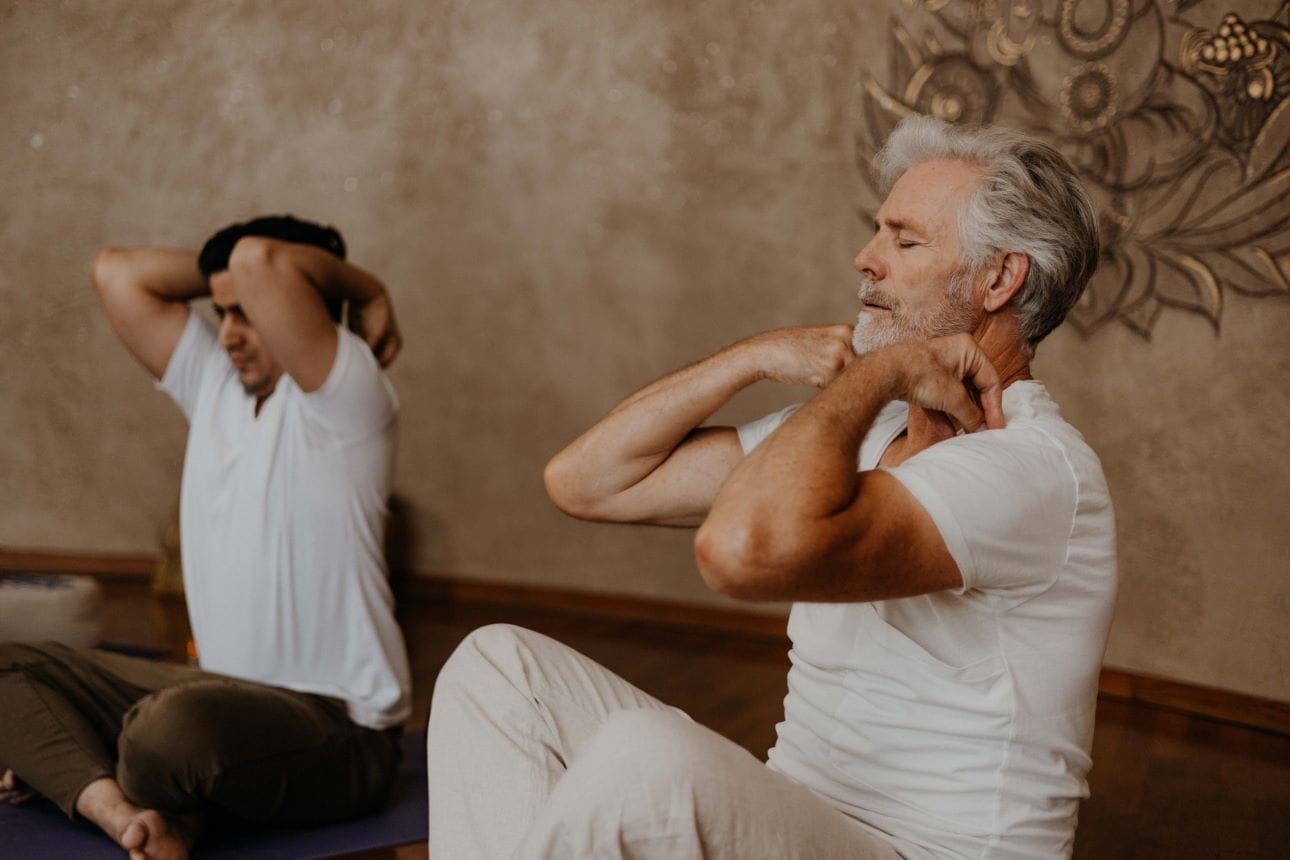
Yoga for men? Of course, especially with men-specific issues, certain movements can bring the necessary balance. With yoga, you can specifically counteract the discomforts and bring your body back into balance. If you're interested in the exciting effects of yoga, then check out the exercises specifically for men.
Yoga helps men with specific complaints
Yoga is often mocked as a women's thing. But it's not for nothing that so many people feel the great added value of the exercises and thereby improve their quality of life. In yoga, it's simply about feeling healthy and comfortable – and men are naturally not excluded from this privilege.
Perhaps you feel addressed by the listing of the following problems:
Muscle imbalance
shortened back sides of the legs
overstressed back
tension
As a man, these problems are not uncommon and can become a burden in everyday life. Especially limited mobility is often seen as a blockage. But you can consciously free yourself from it: specifically promote your flexibility through selected yoga exercises. You will see how effectively you can be relieved.
Special yoga exercises for men
Men's yoga focuses particularly on balance, strength, and stretching exercises. Moreover, you can practice mindfulness and concentration to find more relaxation.
Because a widespread problem for many men in yoga is stiff limbs. This is usually noticeable in exercises where you have to sit on your heels and simultaneously stretch your feet. In many cases, pain sets in after just a few seconds, and the exercise has to be stopped.
But that doesn’t mean you have to give up right away – shortened back sides of the legs can be relieved by a yoga block, and there are many other aids available for beginners. Over time, more complicated positions will also be accomplished – even if it might be a challenge at first.
Men's yoga exercises: instructions & effects
With some practice, you will definitely master the following yoga positions:
Exercise 1: The Warrior
This exercise strengthens the lower back, as well as arms, legs, and ankles. Your groins and thighs will be stretched, digestion will be stimulated. Shoulders, chest, and lungs will be opened. You improve your balance and simultaneously strengthen your stamina. Especially for men in office jobs, the warrior is an ideal way to improve posture.
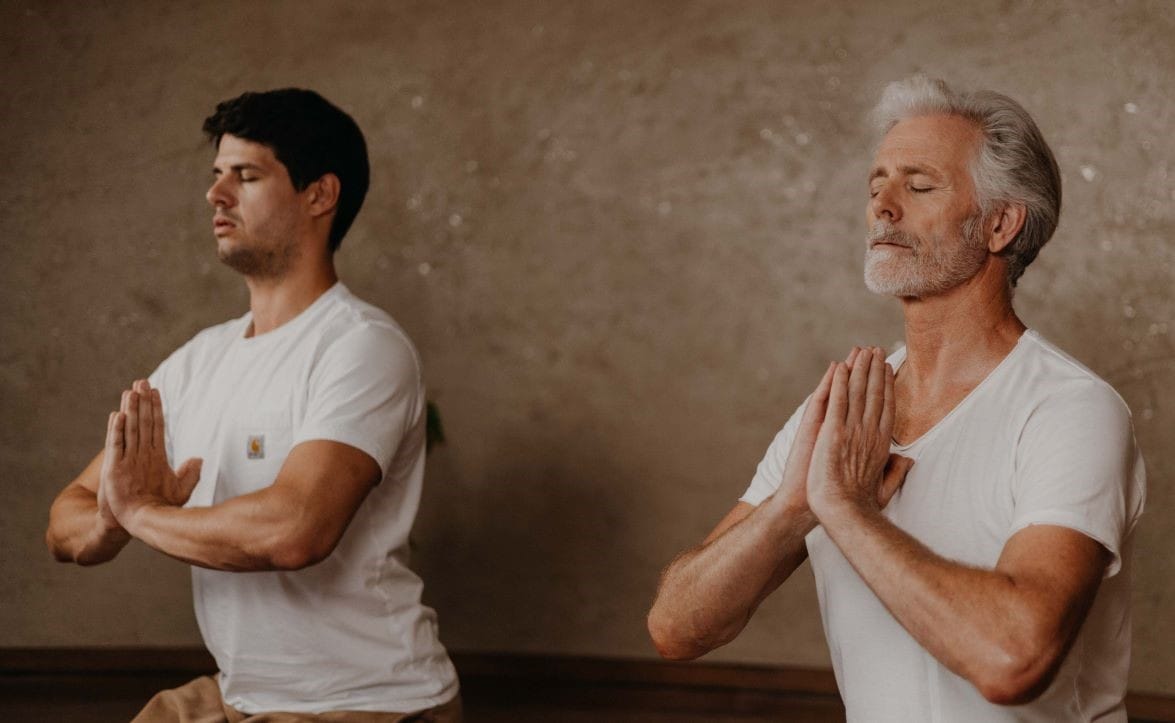
Start in mountain pose (Tadasana). For this, place your feet together and hands at the sides. Lift, spread, and place your toes back on the mat. Stretch your legs, distribute your body weight evenly on the soles of your feet. Thighs and shins slightly inward. The tailbone points slightly forward, the buttocks relaxed. Pull your belly in slightly. Gaze relaxed forward, your body is straight.
Now it starts: exhale, move the left foot back and turn it outward. Heels are in line.
Inhale deeply, raise arms parallel to the floor and let them hover over the thighs.
Turn your palms so that they face the floor.
Open your shoulder blades and chest.
Turn your tailbone and pubic bone slightly forward – this prevents a hollow back.
Your gaze always goes over the arm, hand, and middle finger to the horizon.
Breathe in and out slowly. Remain in this position for about 1 minute.
To resolve the exercise, stretch the right leg with the next inhalation. As you exhale, slowly move your arms back down.
You can now repeat this on the other side of the body.
Try not to tense up, but maintain a relaxed posture. Especially the shoulders and jaw are common problem areas. Correct breathing is crucial here. Try to breathe into the areas of your body that are rigid during the exercise.
Exercise 2: The Bow
In this exercise, you strengthen and stretch your back muscles as well as the muscles of your lower abdomen, shoulders, and spine. Arm and leg muscles are also trained. If you want to counteract stress and fatigue, the bow is exactly the right exercise for you, because it opens the front of the body and the chest – this allows you to breathe more freely and calm down:
Lie on your stomach on the yoga mat. Let your arms rest quietly next to your body, palms facing up. If you like, you can also prop up your elbows and lay your hands flat on the ground at shoulder height. Toes are firmly placed on the mat.
Now breathe evenly.
Bend your knees and bring your heels as close to the buttocks as possible. Lift hands, grab the ankles. Your feet and legs should stay hip-width apart.
When inhaling, move the heels away from the buttocks, lift the thighs. By the pull, you can lift the ribcage, push the shoulder blades together, and press shoulders down away from the ears.
Exhale and lift the tailbone – this slightly raises the back hip. Keep your back completely relaxed.
Lift your head until you are looking forward. The belly is tense and pressed on the ground to keep your position stable.
Remain in this position for a few breaths. Make sure to breathe into the ribcage, not the shoulders. Close your eyes. When inhaling, you can relax the body. Let all stress fall away with exhaling.
Slowly release from the position. Separate your hands and ankles, lower your head, arms, and legs slowly.
Once you are back in a flat position, you can relax for a few moments.
Repeat the exercise 2-3 times.
Make sure you keep your head straight. It should not be stretched too far forward, as it harms the cervical spine and can cause headaches. Don't let your chin protrude too far forward. Please consult a doctor if you have shoulder and disc problems beforehand.
Yoga for men offers a way to build strength and flexibility. You can reduce stress on both a physical and mental level and find calm. Improve your mobility with men's yoga and feel stronger and more comfortable!
Elisabeth Naschberger-Mauracher
Elisabeth Naschberger-Mauracher is the managing director and Ayurveda expert at the European Ayurveda Resort Sonnhof in Thiersee, Tyrol. Since 2019, she and her husband have jointly managed the Ayurveda resort, which has received numerous awards, including: Global Winner: Detox Program, Best Medical Spa Award, and World Luxury Hotel & Spa Award.
Insights
Ayurveda for Men: Nutrition, Body Care & Health
As a holistic approach, Ayurveda influences all areas of life. It naturally does not primarily focus on gender, but rather on an individual's body and mind. However, there are a few small aspects that specifically affect the male body and can be influenced by Ayurvedic methods. We have summarized "Ayurveda for Men" here for you!
Guide for perfect abdominal breathing
Conscious breathing carries a healing power. Especially during meditation, you can use this aspect to free yourself from stress, to focus, and to get closer to yourself again. An alert mind and emotional balance become possible as a result. However, to avoid falling into tense chest breathing, there are some aspects to consider. If you want to execute conscious, correct abdominal breathing optimally, this guide could help you.
Yoga exercises for a healthy back
Whether you have a job where you sit a lot or are constantly on your feet: your back does a lot of work throughout the day. To keep it healthy, it is important to stretch and strengthen your back. Yoga exercises for the back make exactly that possible and can also help if back pain has already started to set in. Here you will find some very simple yoga exercises for the lower back, the shoulder and neck area, and more!