
Manjistha: Everything about the dyer's root in Ayurveda

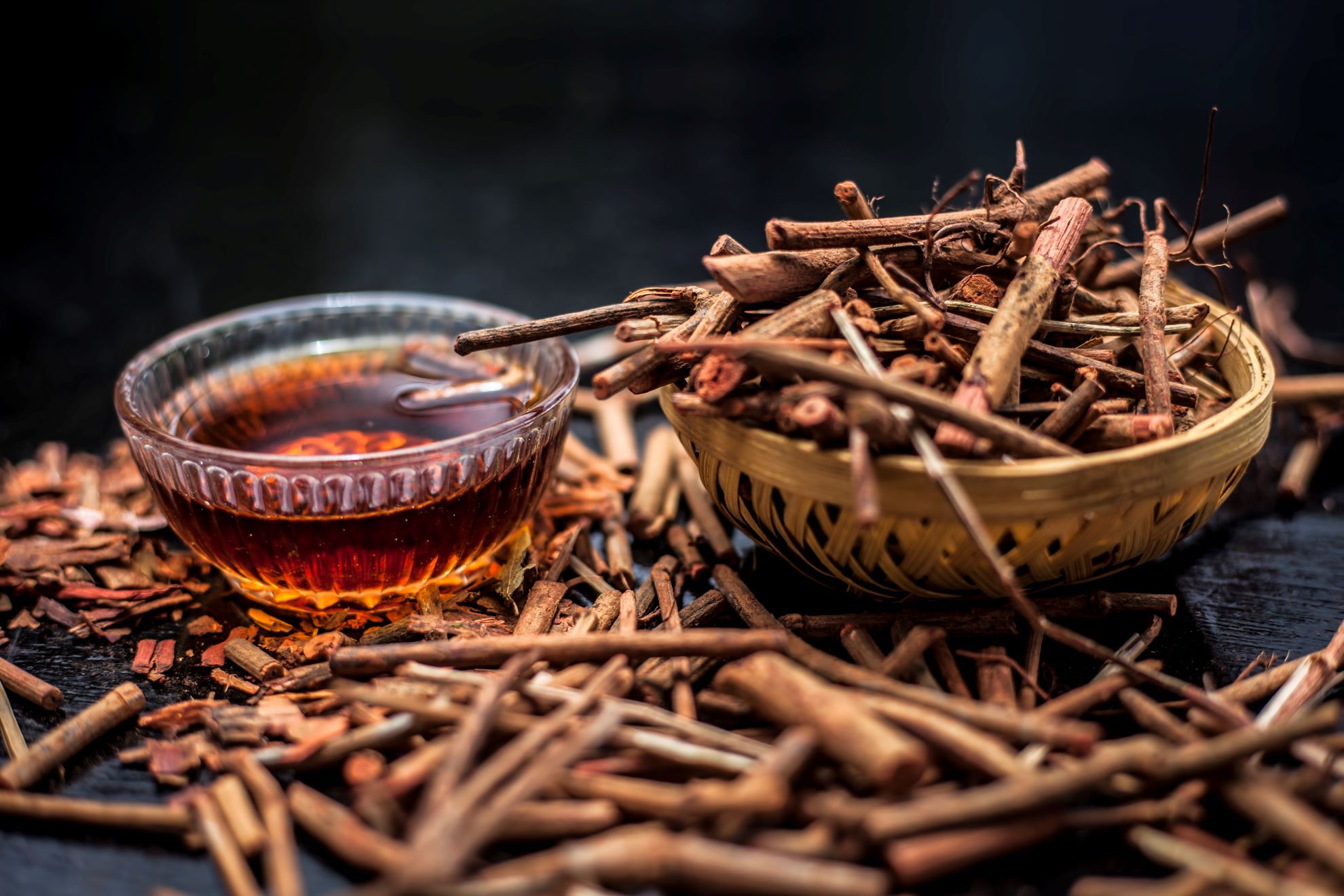
Manjistha brings clarity to the body and mind and helps regain new strength. Thanks to its blood-purifying properties, the dyer's root has a particularly beneficial effect on Kapha and Pitta disturbances and makes burdened and diseased skin radiant again. In this guide, you will learn what positive benefits you can derive from the root and everything about how to best use it.
Interesting facts about the Manjistha plant
Manjistha, also known as Rubia cordifolia or Indian madder, is an evergreen climbing plant which is mainly found in the hilly regions of China and Southeast Asia. There it can grow up to 1.5 meters high and develops elongated, kidney-shaped leaves. In German, the plant is known as the dyer's root because in the past a red dye was extracted from the brownish bark of the roots, which was used for dyeing fabrics.
The name "Manjistha" is Sanskrit and means as much as strong red. This is already a small indication of the blood-purifying properties of the root, because in Ayurveda, it is therefore considered a significant remedy. The dried dyer's root is used as a powder and brings many positive properties with it.
Manjistha Churna: Effects of the dyer's root
In India, the plant is known as a traditional remedy, as in Ayurveda special healing powers are attributed to the Manjistha plant. It can help us regain balance by reducing excess Pitta and Kapha.
In this way, it contributes to freeing the body from toxins. It can give us both physical and mental clarity and purity. Now let's take a closer look at what it can specifically achieve.
Blood purification+
Manjistha is considered one of the strongest blood-purifying plants in Ayurveda. When toxins enter the blood, they can often cause severe physical reactions. However, the root works in a gentle detoxifying and antibacterial manner. As a natural blood purifier, it is meant to not only improve blood quality but also facilitate circulation in the venous system. It can prevent blood clots from forming.
After childbirth (if not breastfeeding), the plant helps heal the uterus and can soothe menstrual complaints . Additionally, it cleanses the liver and supports its function, counteracting various skin diseases or jaundice.
Lymphatic system: Detoxifying the body with the dyer's root+
The dyer's root is especially known for supporting the lymphatic system. It is important that this system functions well, as it is responsible for fighting toxins and pathogens. Even if you eat healthily, you are constantly exposed to various environmental toxins. To get rid of these toxins again, the lymphatic system has to work hard.
When it becomes sluggish, we mainly notice it through Kapha disturbances. We become tired, lethargic, and exhausted or develop skin problems, throat infections, and swollen hands and feet. Manjistha acts as an important aid for the lymphatic system since it supports the system's natural detoxifying and nourishing functions . Thus, it helps break down toxins and cleanse the body. In this way, you feel freer and healthier again!
Healthy skin and radiant complexion+
In cases of skin irritations, using Manjistha can bring a glow back to the skin.
When Pitta is increased, the skin becomes easily reddened and irritated by the heat. With its bitter properties, Manjistha acts soothing and dampens the Pitta dosha again.
Therefore, the root is particularly beneficial for skin diseases like acne or psoriasis. Discolorations and pimples are reduced, and the skin shines in all its natural strength again!
Stress is reduced+
Manjistha also acts supportively for stress, anxiety, or depression.
All these problems can be mentally burdensome, but they can also bring physical ailments like headaches, tension, or heart problems.
Taking the root helps body and mind become freer again and gently resolve muscle tension.
Does Manjistha have side effects?
In principle, taking the dyer's root is generally considered safe. However, you should not overdo it with the amount and always adhere to the prescribed dose. Pregnant and breastfeeding women as well as children should rather avoid it entirely. If you have serious liver or kidney diseases, it is important that you consult your doctor before taking it.
Attention: Don't be alarmed, as taking Manjistha can turn your urine red!
Using Manjistha: Dosage and tips
This versatile root can be used both internally and externally . As a powder, it can be easily taken between meals. Add 1-2 teaspoons of the powder to a cup of hot water. Drink this mixture twice a day at least 30 minutes after eating – preferably take the first dose right after breakfast. Alternatively, there are also Manjistha capsules you can take. But the health-promoting root can do much more!
Face mask and paste for the skin+
In case of skin diseases like itching or acne, Manjistha, applied externally, can bring pleasant healing. Mix the churna with some honey into a paste and spread it on the skin. Let it work for about 10-15 minutes and then rinse it off with lukewarm water. It soothes the skin and brings it back to a glow!
If you want to give your skin a particularly radiant complexion, you can also try this mask.
Here's what you need:
100 g of dried and crushed orange peel
50 g sandalwood
50 g turmeric
50 g Manjistha
The mask gives your face a fresh glow again and also helps eliminate traces of increased Pitta. However, to be careful, you should first try both face masks on a small patch of skin to see how your skin reacts.
Pastes for wound healing+
In addition to its cleansing effect, Manjistha is also used in Ayurveda to support wound healing.
Here are our two favorites for application:
For bone fractures: To support the tissue formation of a broken bone, you can mix a paste from Manjistha powder, whey, and licorice and apply it. The mixture promotes healing in a natural way.
For burns: For burns, there is a special preparation of Manjistha, Ghee, red sandalwood, and Anseveria zeylancia. When applied gently to the affected area, it reduces Pitta and can also support wound healing.
Manjistha for hair+
Are you suffering from hair loss or struggling with dandruff? In this case, people with sensitive and stressed scalps can benefit from the dyer's root. Simply mix a paste of water and the powder of the root and spread it in your hair. After about 10-20 minutes of exposure time, you can rinse the mixture out with warm water; you won't need shampoo anymore.
Our secret tip: As a preparation for hair coloring, this paste is also good for gently caring for the scalp and hair. Depending on your hair structure, you should let it sit for about 60 minutes before rinsing it out. Afterward, plant-based hair color is used and the hair remains healthy and strong despite the coloring.
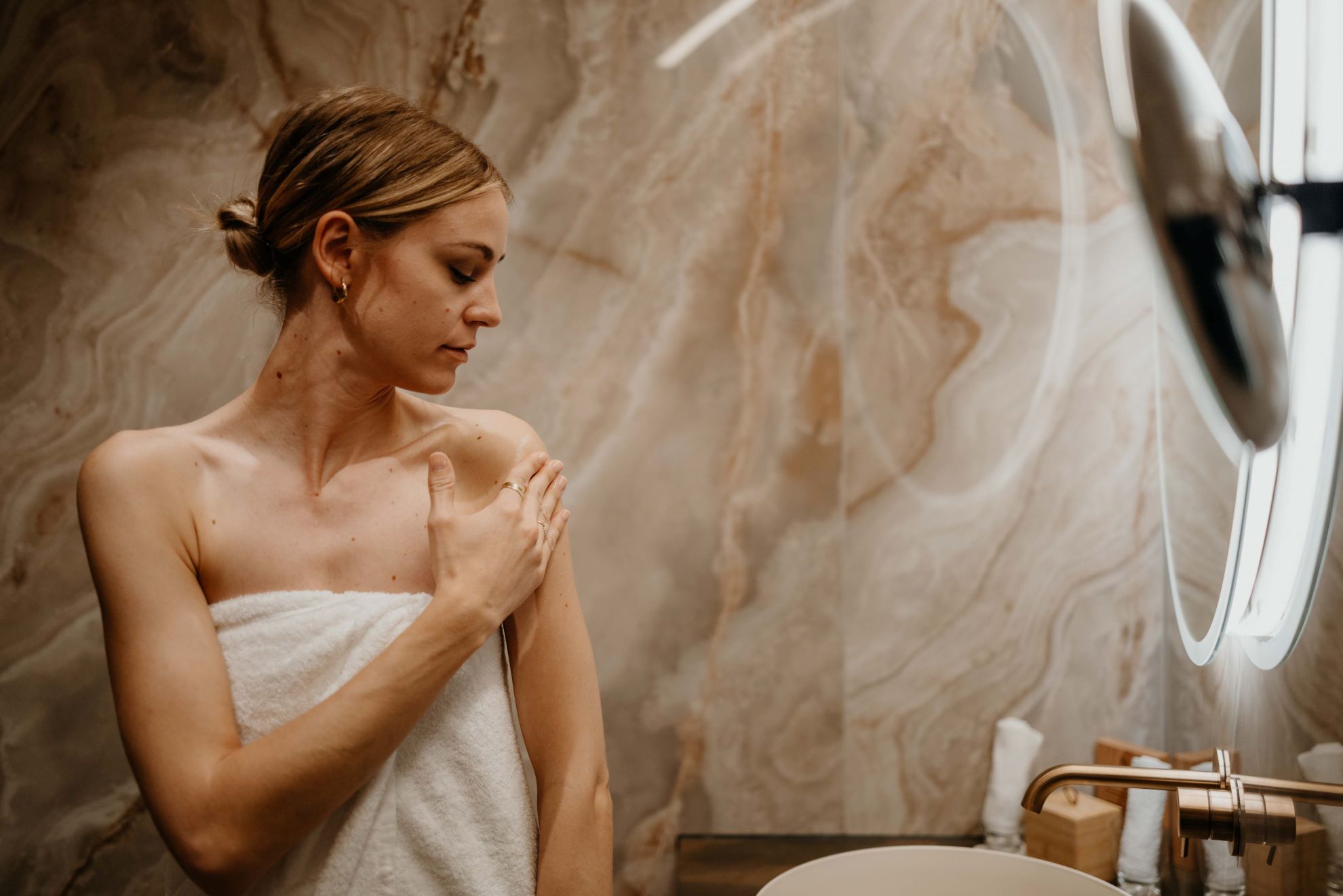
Manjistha helps you achieve a holistic cleansing and allows you to navigate your everyday life clearly and energetically again. It frees you from harmful toxins and brings your skin back to a healthy glow. Just try one of our pastes and see for yourself the healing effect!
Cover image: © mirzamlk – istockphoto.com (File No.: 1182815026)
Insights
Ayurvedic detoxification: methods & home remedies for Ayurveda detox
Ayurveda detoxification, purification, detox cure – whatever you call it, everyone benefits from occasional cleansing of the liver and kidneys. In our article, you will find out how you can also carry out a small detox cure from home and which home remedies can help.

With European Ayurveda® to healthy skin
For Ayurvedic understanding, the skin is much more than just our largest organ – it is also extremely significant for the diagnostic detection of diseases. As a mirror of our interior, we can read from it whether something is not right and accordingly, we can react. Here you will find out how you can ensure healthy skin with the help of European Ayurveda®!
Arjuna: Effects and Uses in Ayurveda
Arjuna strengthens the human body’s center of health – the heart. In Ayurveda, the Indian tree is especially valued for its healing and strengthening effects on this vital organ. Here you can learn how this medicinal plant is used in European Ayurveda® and what positive effects its powder can have on the heart.