
Ayurveda vegan: Vegan nutrition in Ayurveda

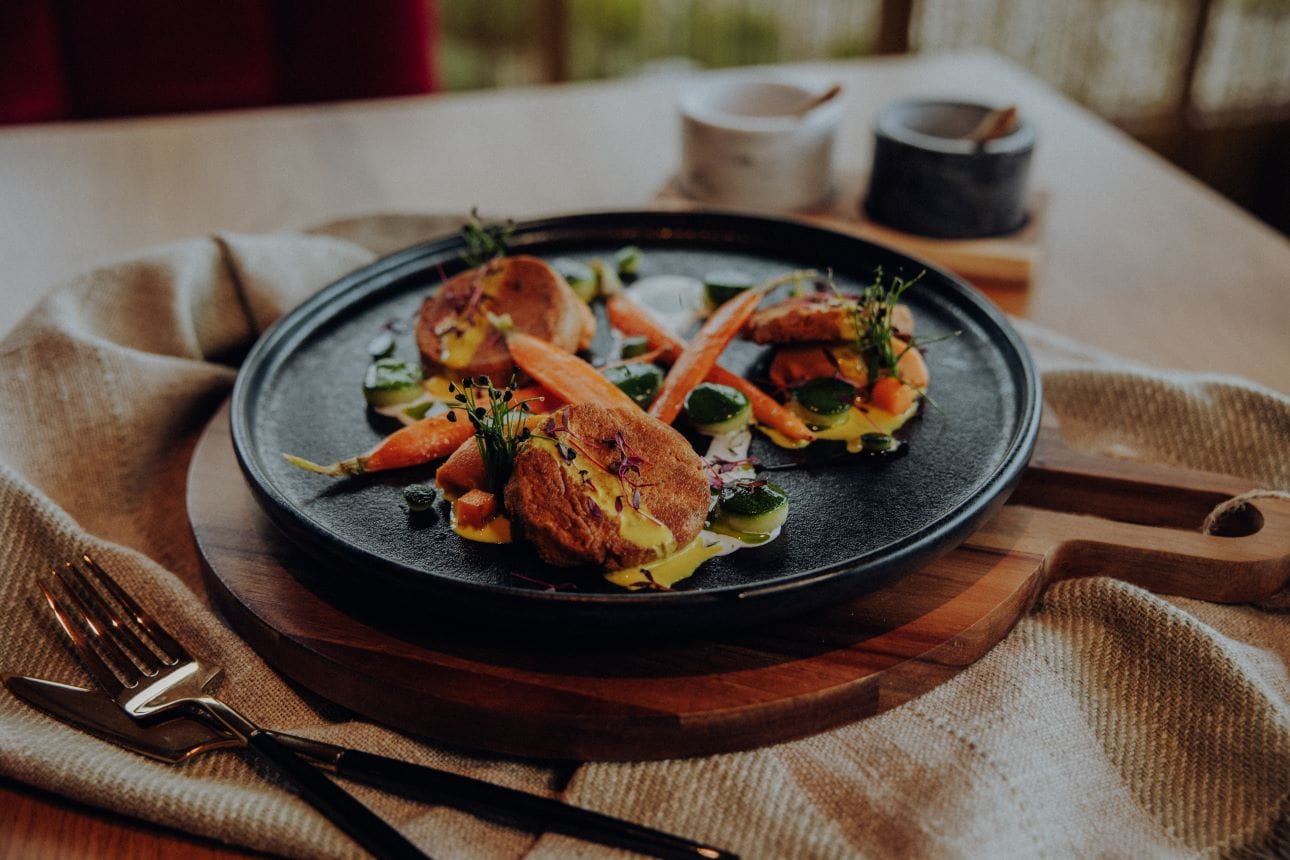
Vegan nutrition completely excludes animal products. But does it work in Ayurveda, where ghee and honey play such a significant role? And is plant-based nutrition healthy, or is it associated with too many disadvantages? Whether vegans really have the healthiest diet and much more, you'll find out here.
What exactly is vegan nutrition?
Those who eat vegan completely avoid animal products. Many vegans justify this decision by not wanting to be responsible for animal suffering. This line of thought is also addressed in Ayurveda, namely in the principle of Ahimsa. Ahimsa means nothing other than non-violence.
At first glance, Ayurveda and veganism seem to go very well together. After all, the Ayurvedic diet already intends to largely avoid animal products, as meat, fish, and dairy products are harder to digest. And finally, Ayurveda teaches: You are what you can digest!
However, in the Ayurvedic lifestyle, certain animal products play an even more important role: honey, yogurt, and ghee are components of many Ayurveda recipes and body treatments. So is it impossible to live and eat Ayurvedic and vegan at the same time? No, quite the contrary!
Vegan Ayurveda recipes and tips for beginners
If you want to eat vegan and still not miss out on the beneficial effects of an Ayurveda meal plan, you need one thing above all: a willingness to experiment! Because a balanced and healthy vegan diet thrives on variety in food selection.
The best products for a vegan diet
The favorite of many vegans? Clearly, legumes, nuts, and seeds, because they provide the body with important nutrients and are beautifully filling. It's best to vary between different types: lentils, beans, almonds, flaxseeds – just find out what you like best.
Equally valuable for the vegan Ayurveda kitchen are pseudocereals like amaranth and quinoa. From these two varieties, for example, you can prepare both a sweet breakfast and a savory meal. Particularly suitable for savory dishes are also whole grains like bulgur, spelt rice, or couscous.
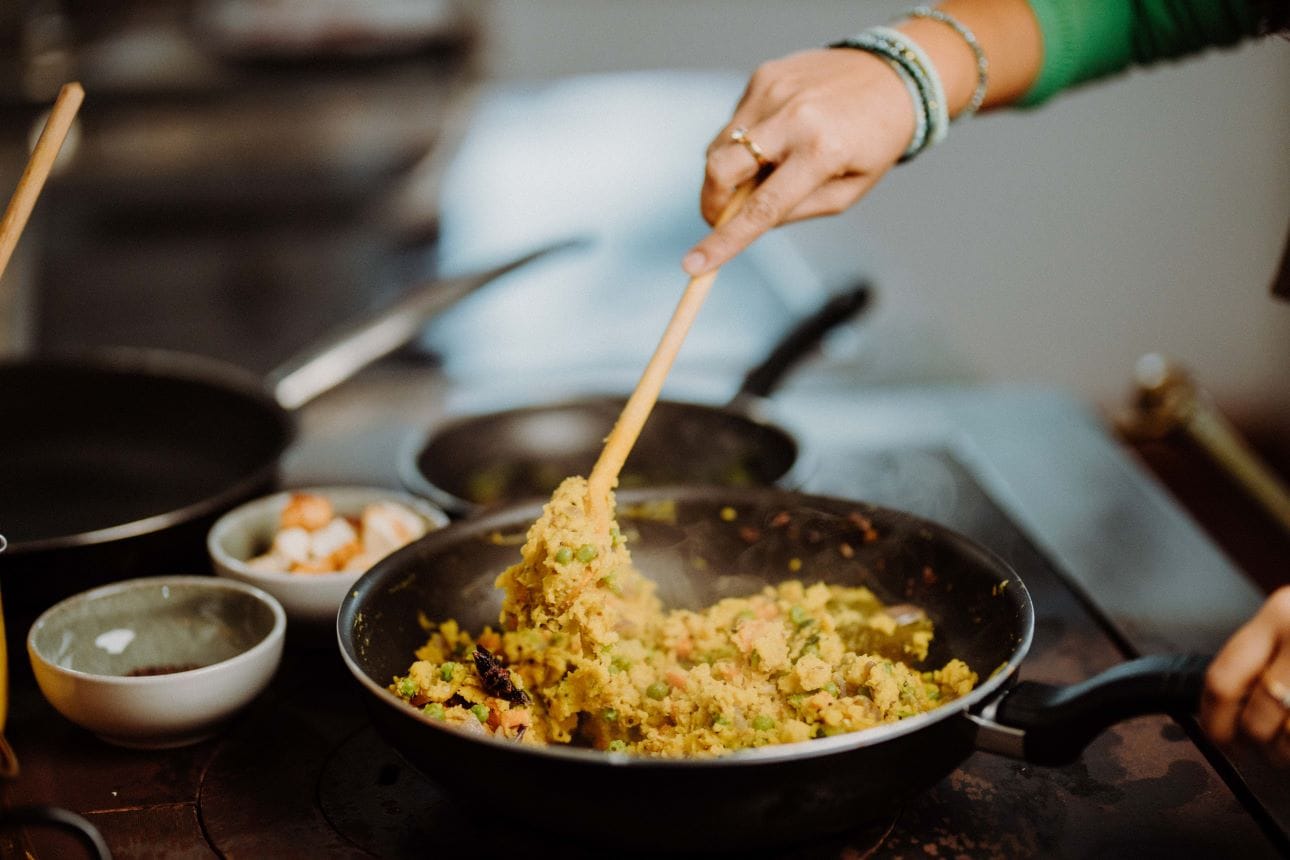
Also, high-quality fats belong in every well-stocked Ayurveda kitchen, because with a small amount of fat, fat-soluble vitamins from your foods can be better absorbed. It's best to choose coconut, walnut, sesame, pumpkin seed, or linseed oil.
However, and this is also very important, not all vegan foods are equally suitable for every constitution type. In Ayurveda, there is no " vegan diet for all three doshas. As an example, here are some recommendations for which foods suit which dosha:
Vata: sweet fruits, almonds, carrots, root vegetables, potatoes, sesame oil
Pitta: rice milk, bitters in herbal teas and green vegetables, dried fruits, legumes
Kapha: spicy spices, cabbage, mung beans, barley
If you are unsure how to design your Ayurveda meal plan as a vegan , it's best to experiment with different products. You will quickly, quite intuitively, find out what gives your body the most energy and your mind the most satisfaction.
Recipes: How can I eat vegan?
The good thing about vegan Ayurveda cuisine: You will certainly never be bored, if only because of the many spices and different fruits and vegetables, which form the basis of your meal plan. Here are just a few examples of delicious and easily digestible vegan meals!
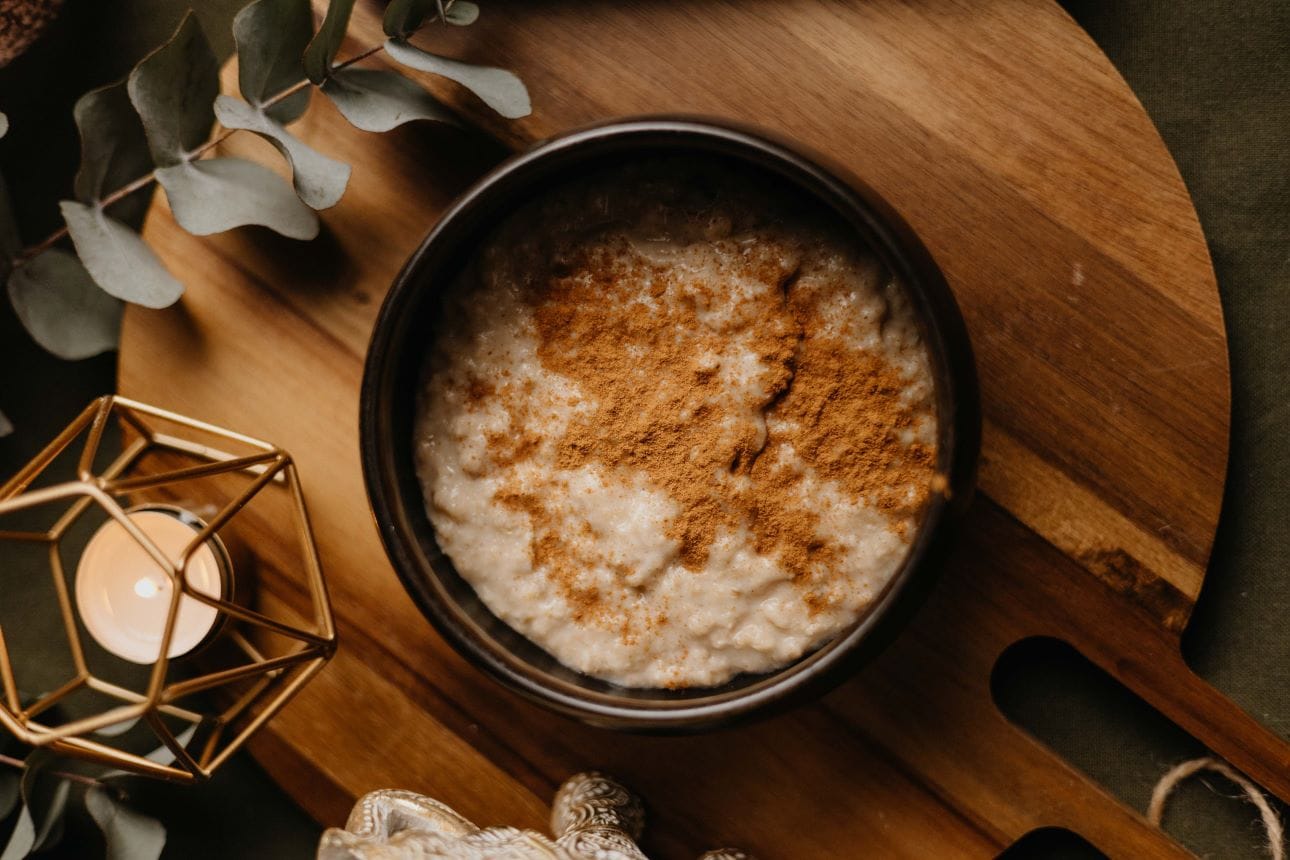
Vegan breakfast: Grain porridge
You can refine the grain porridge in many different ways.
As a base, you only need 4 tablespoons of grain flakes of your choice or alternatively quinoa, which you have soaked overnight. Green spelt also works wonderfully.
Cook your porridge base in some water until it reaches the desired consistency . Whether more liquid or solid – everyone has their preferences here! You can also sweeten the porridge with maple syrup or agave nectar.
Very well suited are warm fruits. For example, you can stew apple pieces with cinnamon and a vanilla bean to create a breakfast that suits any season. Especially in the cold autumn and winter days, it ensures a perfect start to the day.
Vegan main dish, variant 1: Mung Dal stew
Mung Dal is another classic for Ayurveda dishes.
You should just know that you need to soak the legumes for the following dish for at least 4-5 hours. In this case, you need about 3 tablespoons, plus these ingredients:
1 half diced carrot
1 handful of soup vegetables
1 chopped zucchini
1 small, chopped ginger slice
½ teaspoon each of cumin seeds, coriander, and turmeric
Salt
1 pinch of asafoetida (also known as asant)
200 ml of coconut milk (or only half if you are a Kapha type)
200 ml of water (or 300 ml, see above)
2 tablespoons of oil of your choice
Juice of one lime (to taste)
Here's how to do it:
Briefly roast all the spices except the salt in the oil. The cumin seeds will pop open. Then add the ginger and diced vegetables, followed by the liquids and mung dal. Let the mixture simmer on low heat for about 25 minutes or until the dal is soft. Salt it, drizzle with lime juice, and it's done!
Vegan main dish, variant 2: Vegetable soup
As with the morning grain porridge, you have almost unlimited options when preparing soups. We suggest the following combination:
1 handful of vegetables of your choice, e.g., carrots, zucchini, sweet potato, or tomato
1 large slice of ginger
1 small onion, diced
Spices of your choice, e.g., cardamom, coriander, nutmeg, star anise, salt, pepper
1 tablespoon of sesame or coconut oil
500 ml of water
Here's how:
Sauté the onions and chopped ginger in the oil, then add the vegetables. Let the mixture brown slightly, then deglaze with water. Let the soup simmer for about 15 minutes and puree it. You can season and enjoy it as you like.
Ghee: Is Ayurvedic butter vegan?
Perhaps you've already wondered where the ghee is hidden in these recipes. After all, it is otherwise indispensable in so many Ayurvedic recipes. The reason you won't find ghee in recipes without animal products is simply that Ghee not vegan is.
It is a fat obtained from pasture butter . For classic Ayurveda butter with its golden-yellow color, an animal base is necessary. However, today you can already find vegan gheein health food stores, and you can even make a variation of it at home. For the homemade vegan ghee:
150 ml rapeseed oil
50 g coconut fat (or coconut oil, if you want to taste the coconut flavor)
2 tbsp unsweetened plant-based milk substitute
A pinch of salt and turmeric each
The turmeric gives the ghee the classic yellow color, but you can of course leave it out.
To make the ghee, simply melt the coconut fat and stir in all the other ingredients. Put the container in the fridge for an hour and stir the mixture again well before transferring the ghee into a sterilized container and storing it chilled.

Is a vegan diet good for health?
Opinions are divided on this question: not everyone is convinced that a vegan diet can actually be healthy. As in so many areas of life, however, the balance is key.
The fact is: If you know which nutrients your body needs and make the vegan diet varied, it is good for health. High blood pressure can be reduced; even diseases like diabetes and tumors are said to be prevented according to convinced vegans.
Another fact is that plant-based food in the form of freshly prepared meals with natural products contains much less unsaturated fatty acids and fat in general. Therefore, being overweight is a characteristic not found in too many vegans.
At the European Ayurveda Resort Sonnhof, we ensure that our vegan guests can enjoy healthy, wholesome meals. This is also confirmed by the "Vegan Welcome Seal".
Does a vegan diet also have disadvantages?
As you have already read above, eating vegan can be good for your health. However, it is also possible to experience a nutrient deficiency if you always eat the same foods. However, this fact also applies to any other diet.
If you are just switching to veganism, you should regularly check your iron and vitamin B12 levels with your doctor as a precaution. This way you quickly notice if you need to "catch up" in a particular area.
Whether it is "ahimsa" or another motivation: Veganism is a lifestyle more and more people are choosing. An Ayurvedic kitchen can easily accommodate the avoidance of animal foods if you are willing to try new things. As you already know from Ayurveda teachings, each person brings different needs and prerequisites – so there is only one solution: try it out!
Elisabeth Naschberger-Mauracher
Elisabeth Naschberger-Mauracher is the managing director and Ayurveda expert at the European Ayurveda Resort Sonnhof in Thiersee, Tyrol. Since 2019, she and her husband have jointly managed the Ayurveda resort, which has received numerous awards, including: Global Winner: Detox Program, Best Medical Spa Award, and World Luxury Hotel & Spa Award.
Insights
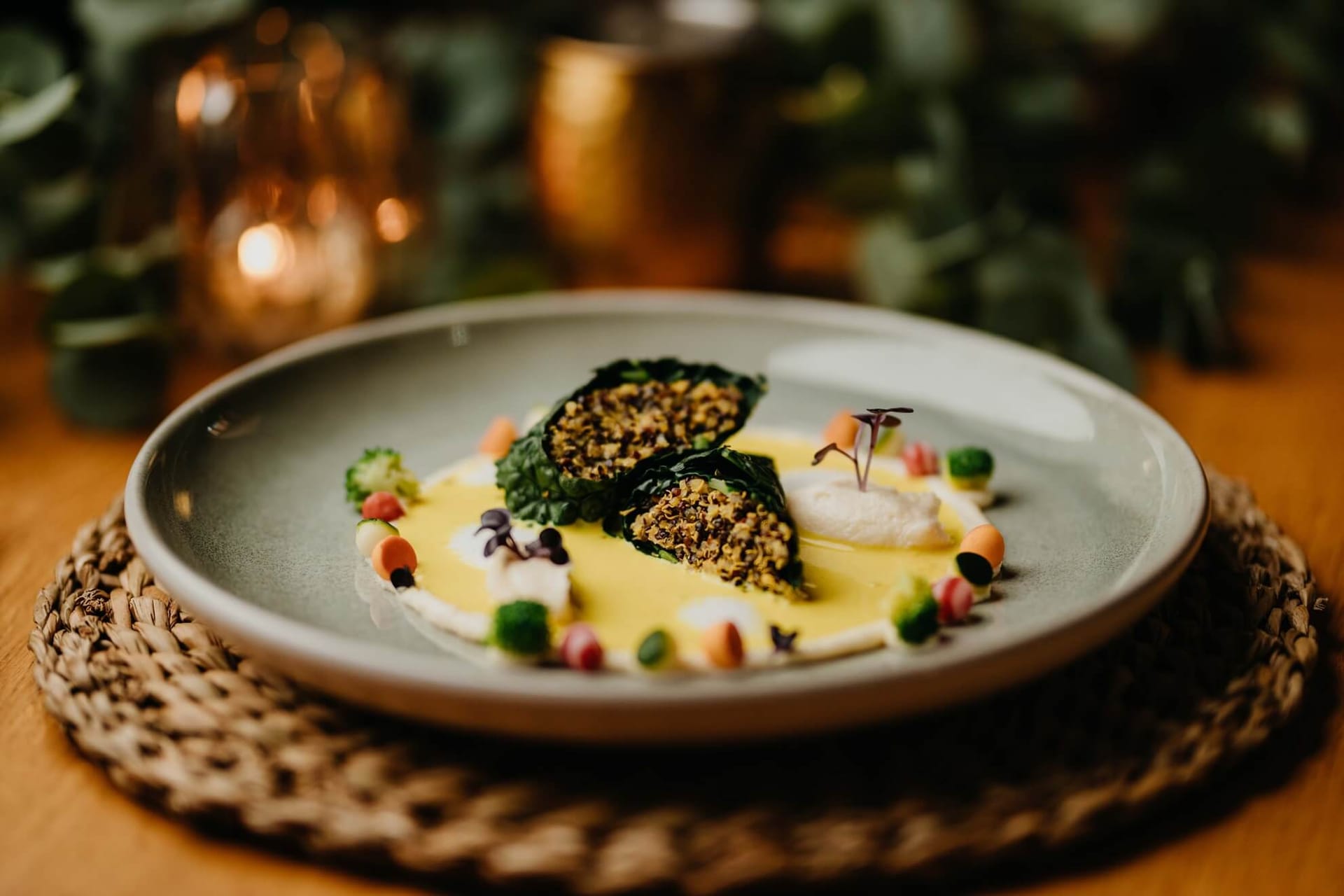
Ayurvedic nutrition: the basic principles of Ayurvedic cuisine
Ayurveda is the oldest holistic healing art of humanity. Ayurvedic nutrition is one of its core elements. Depending on the type, one can ensure a healthy body and a balanced mind with suitable foods.
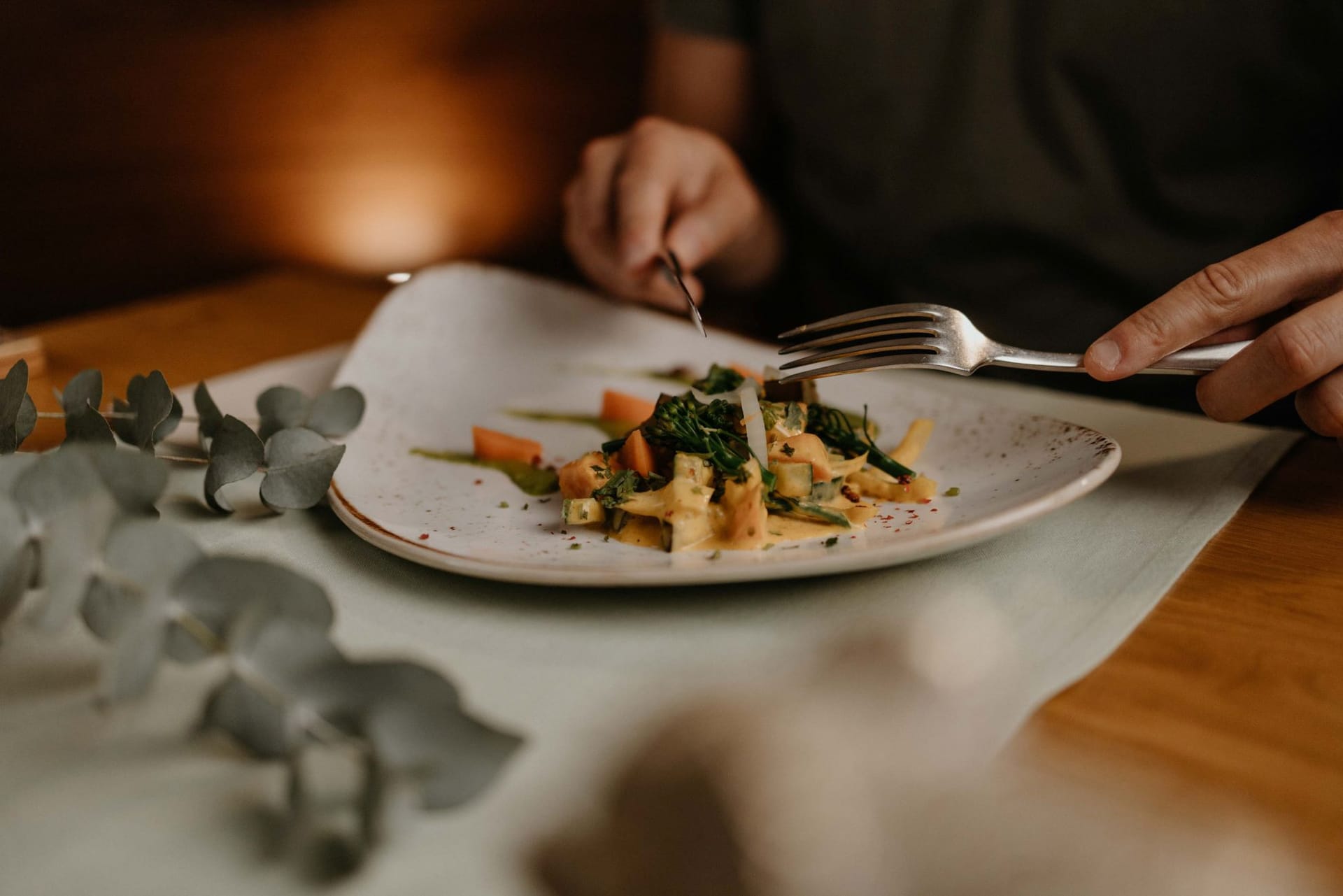
Ayurvedic recipes: these are our favorite recipes
Ayurveda originates from India and translates to "The Knowledge" (veda) "of Long Life" (ayur). It is the oldest holistic healing art of humanity and not only massages, special detoxification treatments, and yoga belong to the Ayurvedic lifestyle, but also nutrition. All elements together are intended to keep various body functions, such as metabolism, digestion, and tissues in balance, so that illnesses cannot arise. Eating habits can be adapted depending on the type. Ayurveda differentiates between the three doshas: Kapha, Pitta, and Vata. Each person corresponds, depending on the manifestation of various characteristics, to one of these three doshas.