
What is Ayurveda? Everything about treatments, massages, nutrition & the three types


Ayurveda has now become a buzzword. It is mostly simply associated with yoga pants and exotic dishes. But there is much more to it! If you also want to learn more about the oldest holistic healing art of mankind, then it’s best to read on. All important information about this fascinating lifestyle is here at a glance. We explain everything about nutrition in Ayurveda, as well as meditation and yoga, and the Ayurvedic cleansing treatments.
General: What does Ayurveda actually mean?
Describing Ayurveda in one word is difficult, as it is incredibly versatile. The term means in Sanskrit "knowledge of life." Just as comprehensive as a definition is also its implementation. As a healing method, Ayurveda exists in Asia, particularly in India. There, it is even scientifically taught and is part of everyday life. However, it does not correspond to evidence-based medicine, which is why the teachings often have to deal with prejudice.
In Europe, or rather in the western cultural sphere, Ayurveda is mostly used for wellness treatments. No wonder that this traditional alternative medicine is also very popular here. Because it is not a single therapeutic measure, but a holistic system. Here, experience and philosophy are combined to ensure a healthy life - both physically, as well as mentally, emotionally and spiritually.
The three Doshas: Vata, Pitta & Kapha
When engaging with Ayurveda, one cannot avoid dealing with the three fundamental energetic principles of life - the Doshas. Actually, the term translates to "potential error". In Ayurvedic belief, these three Doshas are present in every organism. A healthy balance means harmony, disturbances in balance lead to errors in the system. In short: the Doshas are responsible for keeping everything in our body running smoothly. Nature finds its expression in the five elements air, ether, fire, water and earth:
Vata (air, ether): This Dosha is the principle of movement and therefore regulates the conscious and unconscious movements and activities of the body. Vata also ensures the regulation of circulation and body structure, as well as the tissues.
Pitta (fire, water): This is the principle of fire or metabolism. Pitta therefore plays a major role in our digestion, as well as other biochemical activities.
Kapha (earth, water): The principle of structure ensures that things are held together. It is associated with the mental and physical strength of the body. Kapha stabilizes the immune system.
Each person has a very individual constitution. With the knowledge of one's own Dosha type, one can ideally respond to the needs of body, mind, and soul. An imbalance of the Doshas leads to illnesses or complaints. Too much Kapha often means overweight, Pitta people are more likely to have heartburn and stomach ulcers, and Vata people often tend to have a loss of appetite. Which type are you? In the Dosha test you will find your constitutional type.
In Ayurvedic teachings, the seasons are also distinguished by life energies:
Kapha phase: between February and May
Pitta phase: between June and September
Vata phase: between October and January
In these phases, the respective life energies dominate and influence our well-being. We can also use these effects for ourselves! For example, through nutrition, or also special Dosha teas – these bring us back into the necessary balance.
Ayurvedic nutrition: healthy balance
Nutrition is a particularly important component of Ayurvedic healing art. It focuses mainly on the right combination of foods .
Naturally, the orientation towards the Doshas also plays an important role here. Because they are responsible for how we absorb food and utilize it. Digestive problems are usually due to a dysbalance of the Doshas. This leaves Ama (waste) residues, i.e., toxic substances.

What foods are eaten in Ayurveda?+
Pay attention to a high quality of natural/regional foods that are easily digestible.
Legumes: e.g., lentils, mung beans, or chickpeas
Grains, potatoes, pasta and fats only together with vegetables and salad
Rice goes with everything.
Spices and herbs
If necessary, dietary supplements can be added.
When preparing, aim to eat as fresh and warm as possible.
What is drunk in Ayurveda?+
Drink plenty, preferably (ginger) water.
Hot drinks are preferable to cold drinks!
When is food eaten in Ayurveda?+
Eat three times a day without snacks.
Lunch as the main meal, breakfast and dinner as light meals.
Ideally, eat warm; therefore, a light, but warm meal should be consumed in the morning. A porridge with nuts or fruits is well suited.
How is it cooked?+
It is best to consume only cooked food.
Raw food should only be eaten as a side dish or at lunch.
What flavors exist in Ayurveda?+
There are "6 Rasas": the flavors sweet, sour, salty, pungent, bitter, and astringent.
They are best found simultaneously in one and the same dish.
What spices are there in Ayurveda?+
Salt (more or less depending on constitution type) and preferably use only rock salt.
Instead of sugar, one can also use Sharkara (Ayurvedic cane sugar), honey, and maple syrup.
Aromatic spices & herbs: e.g., ginger, pepper, asafetida, horseradish, turmeric, and mustard seeds.
What is avoided in Ayurvedic cuisine?+
Do not heat honey or use it for cooking or baking.
Ghee instead of butter or oil: it purifies the tissue.
No animal proteins like meat, fish, eggs – do not eat these together.
Do not consume milk together with salty or sour foods, leafy vegetables, or fresh fruits.
Sweet and heavy foods should be avoided.
Also very important: Eat slowly, consciously, and in appropriate amounts! It is particularly sensible to only eat when you are hungry. Ideally, three to five hours after a main meal. One should also not overeat: The stomach should only be ¾ full afterwards. A calm and relaxed environment is equally relevant. Therefore, one should neither read, work, nor watch TV while eating. It's best to sit down and also allow yourself five to ten minutes of quiet sitting after eating.
Eating at the same time of day is also beneficial. Of course, there are also special dietary tips that can help achieve beautiful and healthy skin . Here you will also find simple and great Ayurveda recipes and delicious ideas for an Ayurvedic breakfast.
Meditation & Yoga: Learn mindfulness
In addition to dietary tips, Ayurveda also includes practices for integrating more mindfulness into daily life . Meditation and yoga are particularly suitable for this.
Regular meditation, for example, can promote health sustainably and have a positive effect on our well-being. In a relaxed yet receptive state, one can consciously pause and get to know themselves better. For instance, one can better cope with chronic pain and mental illnesses, and also combat sleep problems . Meditation results in:
a more stable circulation
lower blood pressure
a stronger immune system
a stronger heart
pain relief in chronic illnesses (allergies, asthma, migraines, etc.)
increased attention and improved concentration
overcoming anxiety and dependencies
combating depression and burnout
Yoga also has various benefits, such as increasing flexibility, providing effective stress balance, and helping with various problems, from tensions to assisting with herniated discs. Yoga is incredibly versatile and helpful in various life situations.
Whether for seniors, children, pregnant women, or at the office – with the many different styles, there is something for everyone. Yoga can even help with losing weight. Indeed, it's a wonderful method to shed pounds. In summary: Yoga provides the necessary balance for a happy and healthy life. Therefore, you should definitely try this Ayurvedic stress management.

Ayurveda treatments in Europe
Ayurvedic cleansing treatments are extremely popular in Europe – and rightly so. Our daily life is characterized by stress and pressure to perform and we rarely get a chance to properly focus on our health.
Therefore, there is a broad interest in holistic healthcare with complementary natural medicine. Ayurveda treatments offer exactly that: inner harmony & physical health.
A specific procedure ensures that everyone is treated individually and holistically. An in-depth conversation with an expert, and a pulse diagnosis, then help put together a very personal course of treatment.
This includes, for example, body treatments, steam baths, and Ayurveda massages, but also detoxification treatments and strengthening of the immune system.
Also, yoga and breathing as well as relaxation exercises are part of the Ayurveda treatment. All of this is rounded off by focusing on a balanced diet. Toxic foods are avoided and toxins in the body are expelled.
Especially the detox course is suitable here. This way, the body's self-healing is activated – one finds greater satisfaction and well-being.
Conclusion: Ayurveda as natural care
Ayurveda is more than just a trend – by focusing on the individual needs of our bodies, we can improve our lives sustainably. A balanced diet balances the doshas, with yoga and meditation we can achieve harmony, and through beneficial cleansing treatments and massages, the body detoxifies sustainably. In this sense, Ayurveda is an enriching lifestyle with the goal of inner and outer satisfaction.
Insights

Dosha Test: Determine Your Ayurveda Type
Determining your Dosha type is an important part of ayurvedic teachings. Your physical appearance and susceptibility to illnesses shape your Ayurveda type. Vata, Pitta, or Kapha – which type are you? Find out now with our Dosha Test!

Basics of Ayurvedic Nutrition
You are not what you eat – you are what you digest! What you provide your body with every day forms the foundation of your health.
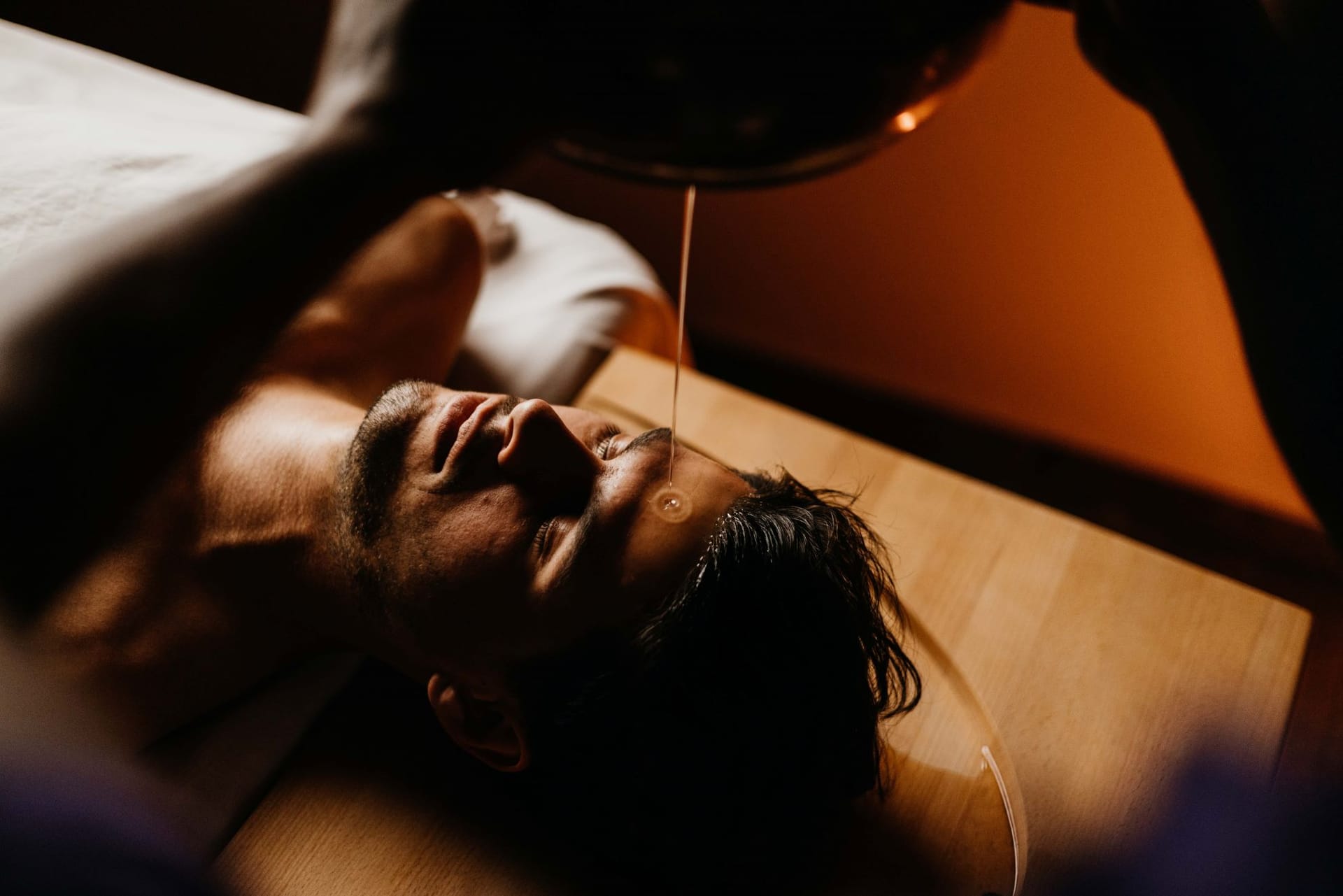
Ayurveda Massages: Overview of All Approaches
Ayurveda massages have a positive effect on health and are therefore primarily used for medical applications. Incidentally, there is also a feel-good effect. Depending on individual customization, an Ayurveda massage can be relaxing, invigorating, or strengthening – or all of these combined. Through treatment appropriate to the type, Ayurveda massages are good for a healthy body and mind. Here are all the important types at a glance.